How to Wear Thigh-High Socks: Fit, Stay-Up Tips & Outfit Ideas
Choose the height and construction first. Then use fit, material, footwear and proportion to decide whether you want a classic thigh-high, a lower over-the-knee line, or an open-foot stirrup style.
Start with the silhouette
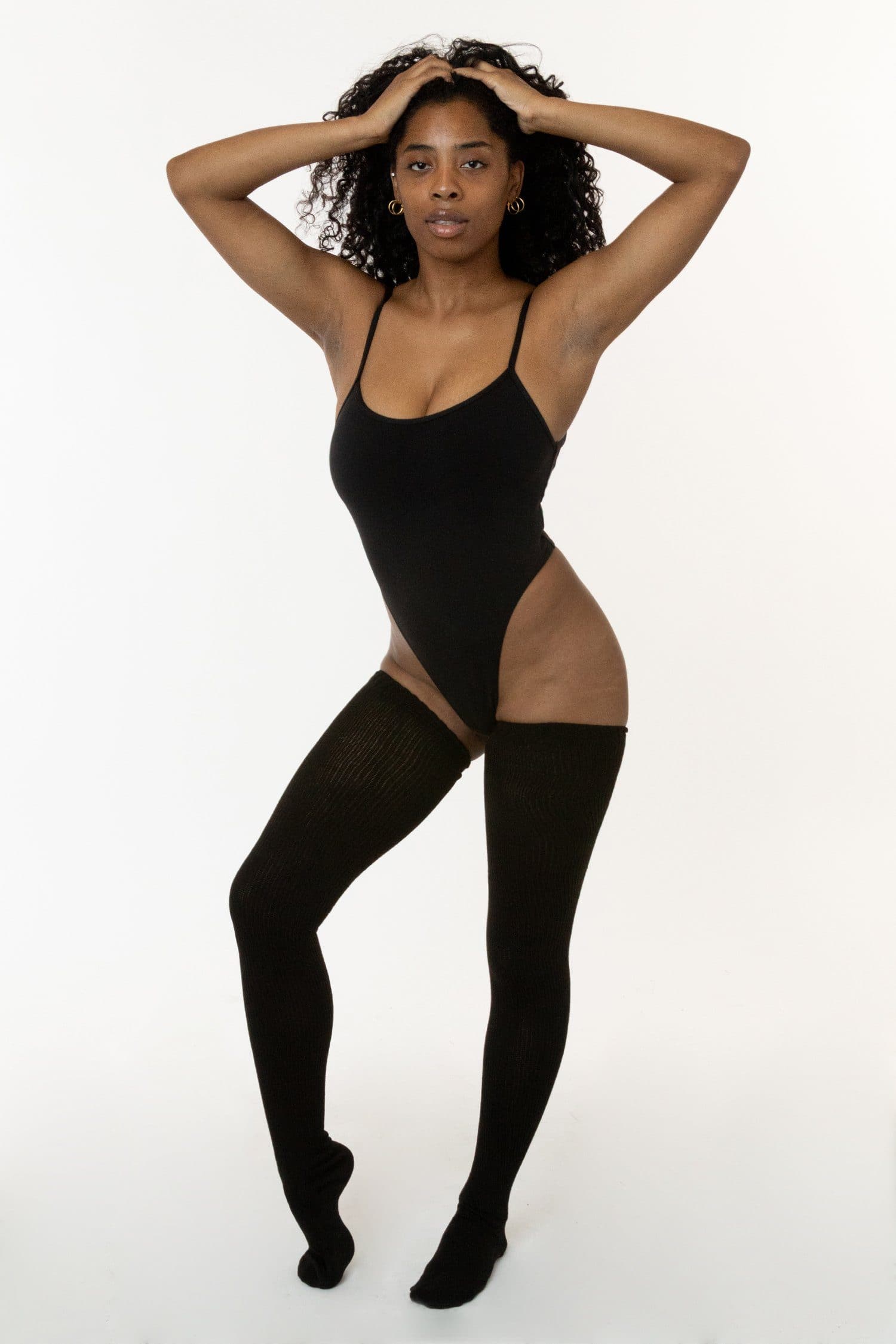
Thigh-high socks are easiest to choose by where you want the top edge to land and how you want the sock to stay there. A full thigh-high, a shorter over-the-knee sock and a stirrup can all look similar in a product grid, but they create different lines on the leg and use different construction to hold their shape.
Finished placement also changes from person to person. Sock length matters, but so do leg length, stretch, cuff construction, heel placement and how high you choose to pull the garment. A listed measurement is a useful comparison point, not a promise that the sock will land at the same body point on everyone.
At Los Angeles Apparel, our current legwear gives us clear examples of those differences: the core Thigh High Sock uses a foldover hem and deeper heel construction, the Classic Over The Knee Sock uses elastic with a ribbed cuff, and our stirrup styles use an open-foot shape with silicone elastic at the top.
In this guide, we compare height, stay-up construction, fit through the foot and leg, material, full-foot versus stirrup shapes and outfit proportion. The goal is simple: decide what the sock needs to do before you choose the color.
Height
OTK → full thigh-high
Hold
Foldover · rib · silicone
Foot
Full sock · stirrup
Start with
Height before color
What Counts as a Thigh-High Sock?
In practical shopping terms, a thigh-high extends above the knee and farther onto the thigh than an over-the-knee sock. That sounds simple, but the useful part is the proportion: a longer sock gives you more room to place the upper edge higher, while a shorter OTK style is designed around a lower line above the knee.
Our core Thigh High Sock lists an approximate 26-inch leg length. Our Classic Over The Knee Sock lists approximately 20.5 inches. Those numbers are useful because they show the intended difference in sock proportion before you even compare styling.
They still do not tell you the exact final body point. A taller wearer may see a lower finish than a shorter wearer in the same sock, and a stretchier construction can change how the fabric distributes along the leg. Use the listed length as a starting comparison, then follow the exact product’s fit and sizing guidance.
Thigh-High vs. Over-the-Knee Socks
This is the first decision to make because it changes the whole outfit proportion. If you want the sock to be a strong vertical element that reaches farther up the thigh, begin with a thigh-high. If you want a smaller break just above the knee, begin with an OTK style.
Swipe the table to compare →
| If you want | Start with | Why |
|---|---|---|
| Higher placement on the thigh | Thigh High Sock | The longer sock proportion gives you more upper-leg coverage and a higher visual line. |
| A lower line above the knee | Classic Over The Knee Sock | The shorter OTK proportion creates a visibly lower top edge. |
| An open heel and foot | Nylon Tricot Thigh High Stirrup | The stirrup changes the foot construction while silicone elastic supports the upper edge. |
| A statement texture or finish | Velvet · Lamé · stretch vinyl stirrups | The height remains important, but the material becomes a major part of the look. |
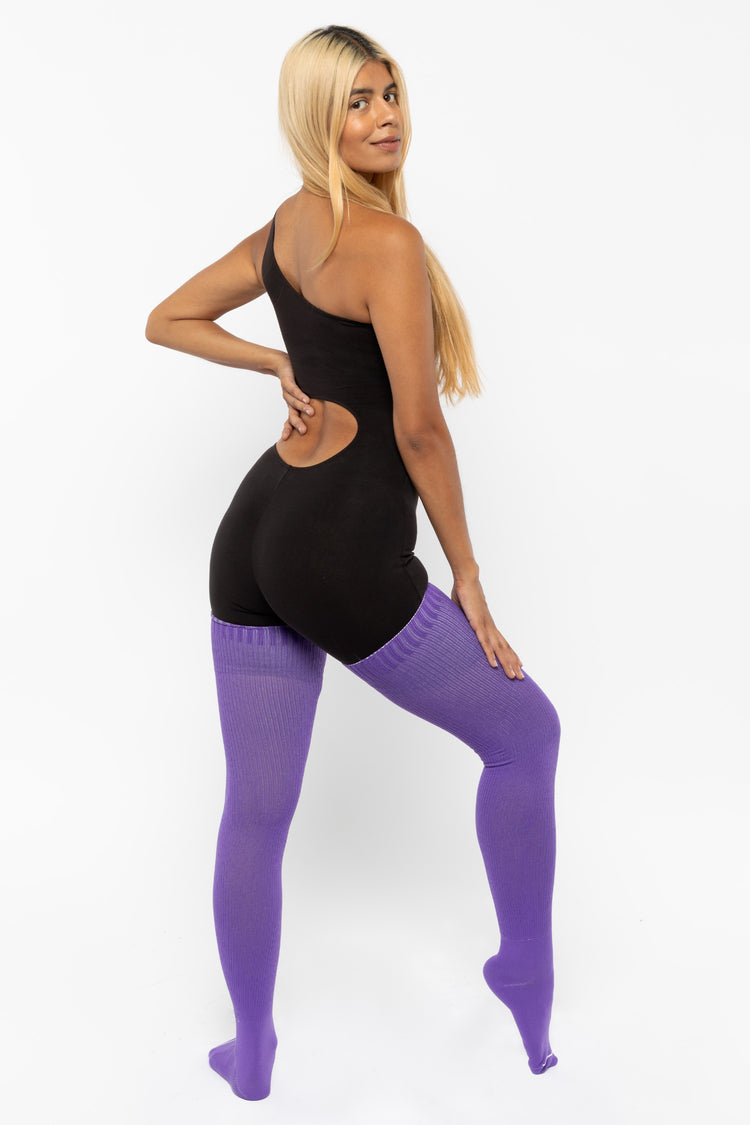
Approx. 26-inch leg length with a foldover hem and a deeper Y-gusset heel.
View the thigh-high →
Approx. 20.5-inch leg length with a cotton-rich knit, elastic and ribbed cuff.
View the OTK sock →
Approx. 26-inch thigh-high with silicone elastic and an arch-supporting stirrup.
View the stirrup sock →What Helps Thigh-High Socks Stay Up?
The best answer starts with the sock itself. Different constructions create hold in different places, so there is no single cuff system that explains every thigh-high.
Our core Thigh High Sock uses a foldover hem at the top and a deep Y-gusset that creates a deeper heel. The Classic OTK uses elastic with a ribbed cuff. The Nylon Tricot stirrup uses silicone elastic at the upper edge and an open-foot stirrup shape. Those are three different solutions, not one design with different styling.
The upper finish is built to stay in position without turning the whole sock into one tight band.
A ribbed top and elastic create the secure upper edge on this shorter cotton-rich style.
The upper edge uses silicone elastic while the stirrup leaves the heel and much of the foot open.
On a full-foot sock, a heel that has drifted upward or twisted can throw off the rest of the leg.
Distribute the fabric along the leg instead of forcing all the extra pull into the top edge.
If an OTK has to be stretched aggressively to reach a thigh-high position, start with a longer construction instead.
How Should Thigh-High Socks Fit?
Fit is easier to judge when you stop treating the sock as one long tube. Check the foot, leg and upper edge separately. If one zone is being forced out of position, pulling harder at the top usually does not fix the underlying fit.
The Foot
On a full-foot sock, start by seating the heel where the heel belongs and smoothing the toe and sole. The core Thigh High Sock uses a deeper Y-gusset specifically to create more heel depth. If the heel has been dragged upward just to gain extra height, the rest of the sock can twist or feel misaligned.
A stirrup is different. It leaves the heel and much of the foot open, so the lower anchor comes from the strap under the arch rather than a closed heel pocket.
The Leg
The fabric should extend smoothly enough that the shape of the sock still reads clearly. Small adjustments are normal, but you should not need to pull one area to an extreme just to make the top edge reach the position you want.
If a shorter OTK only reaches your preferred height under heavy tension, the more useful change may be the sock length rather than simply pulling harder.
The Upper Edge
The top should feel secure enough for the intended construction to do its job. That does not mean every thigh-high should feel equally tight. A foldover hem, rib cuff and silicone-backed edge are different systems, so compare the feel to the exact product rather than one universal rule.
Follow sizing notes product by product. The Nylon Tricot, Velvet and Lamé stirrup pages currently recommend sizing up when you are unsure or have longer legs. The Stretch Vinyl Stirrup instead says the style runs small and recommends sizing up one size when you are unsure. Those instructions should not be transferred to the core Thigh High Sock or Classic OTK.
Compare Thigh-High Materials and Construction
Material changes more than the surface look. It also changes how the sock reads in an outfit: a cotton-rich OTK feels visually different from a sleek nylon tricot stirrup, and a velvet or metallic finish becomes part of the styling decision before color even enters the picture.
Swipe the table to compare →
| Style | Material direction | Hold / construction | Best decision cue |
|---|---|---|---|
| Core Thigh High Sock | 85% polypropylene · 13% nylon · 2% elastane | Foldover hem · deep Y-gusset heel · full foot | Classic full-height thigh-high with the option to wear the rib pulled up or scrunched lower. |
| Classic Over The Knee Sock | 97% cotton · 3% elastane | Elastic + ribbed cuff · full foot | Cotton-rich OTK direction with a lower upper-leg line. |
| Nylon Tricot Stirrup | 80% nylon · 20% elastane | Silicone elastic · open heel/foot stirrup | Sleek, close stirrup silhouette when you want the foot more exposed. |
| Velvet Stirrup | 4-way stretch velvet | Silicone elastic · stirrup | Plush texture becomes a visible part of the outfit. |
| Lamé Stirrup | Stretch Lamé · 82% nylon / 18% spandex | Silicone elastic · stirrup | Metallic surface for a stronger statement finish. |
| Stretch Vinyl Stirrup | Stretch vinyl with a glossy, latex-like appearance | Silicone elastic · stirrup | High-shine statement finish with its own product-specific sizing note. |
How to Wear Thigh-High Socks
Once the height and construction are right, styling gets much easier. The useful question is not how many outfit ideas you can collect. It is what visual job the sock should do: create a visible break below a short hem, add a fitted vertical line under a larger top, continue a close-to-body silhouette, or sit more quietly under a longer skirt.
With a Mini Skirt
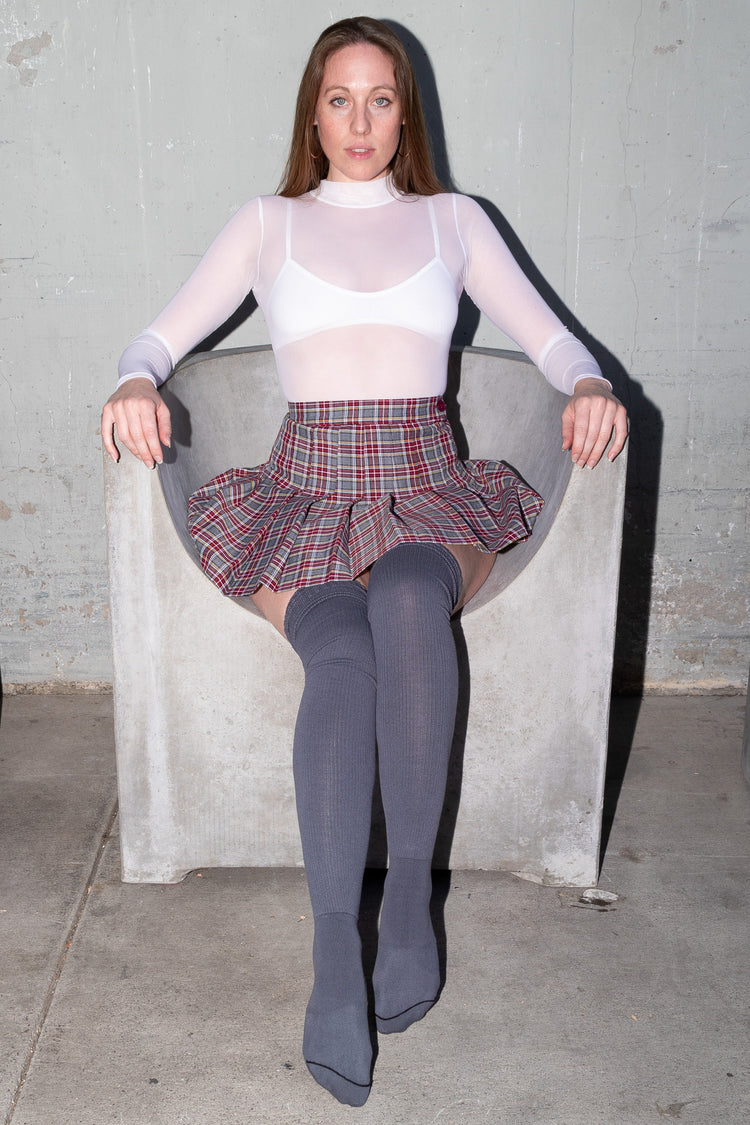
The gap between the skirt hem and sock top becomes part of the outfit. A higher thigh-high reduces that open space and makes the sock more dominant. A lower OTK leaves a larger break and can read more classically preppy, especially with simple footwear.
With Shorts
Shorts expose more of the sock, so the legwear becomes a stronger part of the look. This works best when the rest of the outfit gives it room to read. A simple tee, tank, sweatshirt or fitted top keeps the outfit from competing with itself.
With a Bodysuit
A close-fitting bodysuit and thigh-highs create one continuous fitted proportion with a deliberate break at the upper leg. Stirrup styles are especially useful when you want that close line through the leg but want the heel and much of the foot exposed.
With Loafers, Oxfords or Mary Janes
The Classic OTK is a natural starting point for this direction: its current product page specifically pairs it with loafers, Oxfords and Mary Janes. Keep the rest of the outfit relatively clean if you want the combination to read preppy rather than costume-like.
Worn Scrunched Lower
The core Thigh High Sock is not locked into one height. Its product description says the rib can be worn pulled up or scrunched down. That lets the same full-foot sock shift from a full thigh-high line toward a lower, softer legwear shape without pretending every thigh-high is designed to do the same thing.
How to Balance Thigh-High Socks in an Outfit
Good proportion usually comes from letting one part of the outfit do the visual work. Thigh-highs already create a strong horizontal break at the upper leg, so the rest of the silhouette does not need to be complicated.
The open space between the hem and sock top becomes the proportion. Raising or lowering the sock changes that balance immediately.
A looser sweatshirt, tee or jacket above makes the long fitted line below feel intentional instead of busy.
The silhouette stays fitted while the material change at the sock creates enough separation to keep the outfit readable.
A longer hem reduces how much of the upper edge is visible, so OTK socks can work more like a supporting layer than the main focus.
Thigh-High Socks vs. Leg Warmers vs. Tights
These categories can overlap visually, but they do different jobs. The quickest way to separate them is to look at where the garment begins and ends, and whether the foot is part of the construction.
Swipe the table to compare →
| Legwear type | Construction | Useful when |
|---|---|---|
| Thigh-high sock | Independent sock covering the foot and extending onto the thigh. | You want the sock itself to create a high upper-leg line. |
| Over-the-knee sock | Same general sock family, but with a shorter upper-leg proportion. | You want coverage above the knee without pushing the top edge as high. |
| Thigh High Leg Warmer | Leg layer rather than the same closed-foot sock construction; it can be worn straight or scrunched. | You want a leg-focused layer that can sit over tights, stand alone, or be pulled lower over the heel. |
| Tights | A continuous lower-body garment that begins at the waist and extends down the legs, with the foot treatment depending on the style. | You want one continuous layer rather than two separate socks. |
Common Thigh-High Sock Fit Mistakes
Most fit problems are easier to understand when you return to height and construction instead of looking for a trick that treats every sock the same way.
-
01
Choosing only by color
Resolve height, foot construction and hold first. Color is useful only after the silhouette works for the outfit.
-
02
Treating thigh-high and OTK as the same length
They can create visibly different upper-leg placement even before body proportions are considered.
-
03
Pulling a shorter sock higher than intended
Excessive pulling can distort the way the foot, heel and upper edge sit. Start with a longer style when you want a higher line.
-
04
Ignoring heel placement
On a full-foot sock, seat the heel first. The whole leg can feel off when the heel has been dragged out of position.
-
05
Assuming every style stays up the same way
Foldover hems, rib cuffs, elastic, silicone and stirrup construction solve different parts of the fit.
-
06
Using one universal sizing rule
Some stirrup styles recommend sizing up in specific situations. That does not create a category-wide rule.
-
07
Choosing statement material before silhouette
Velvet, Lamé and vinyl can change the mood of the outfit, but the height and construction still need to work first.
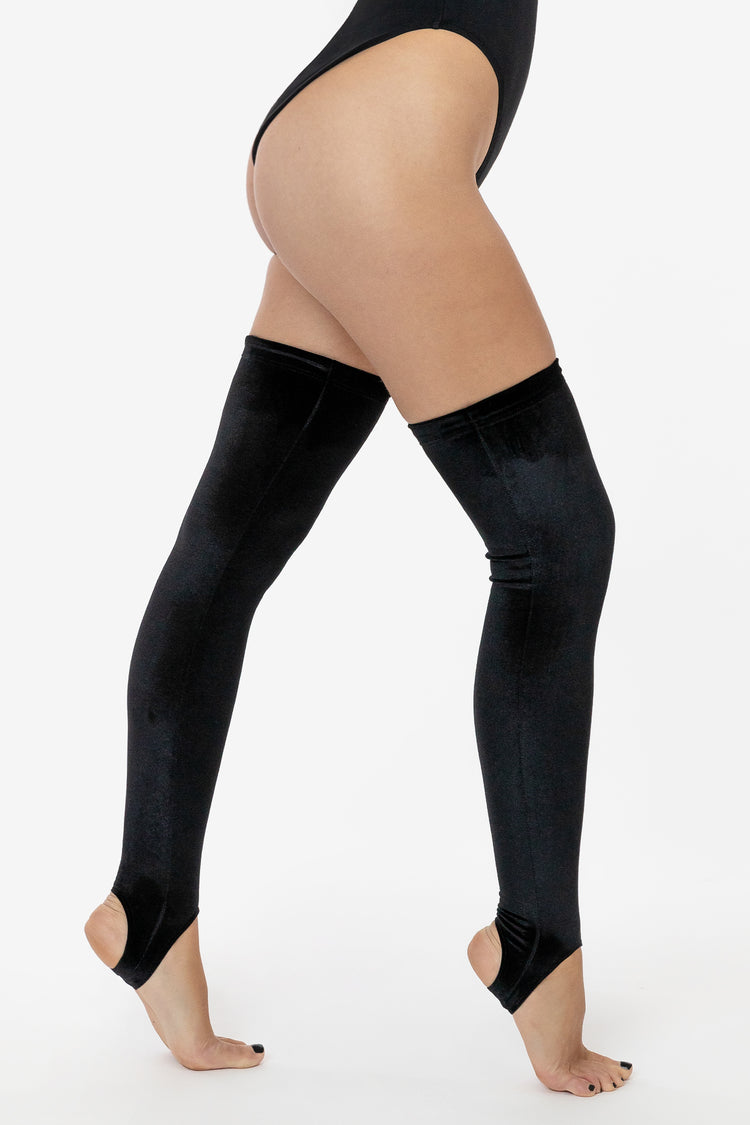
4-way stretch velvet keeps the stirrup construction visible while making texture a larger part of the outfit.
View velvet →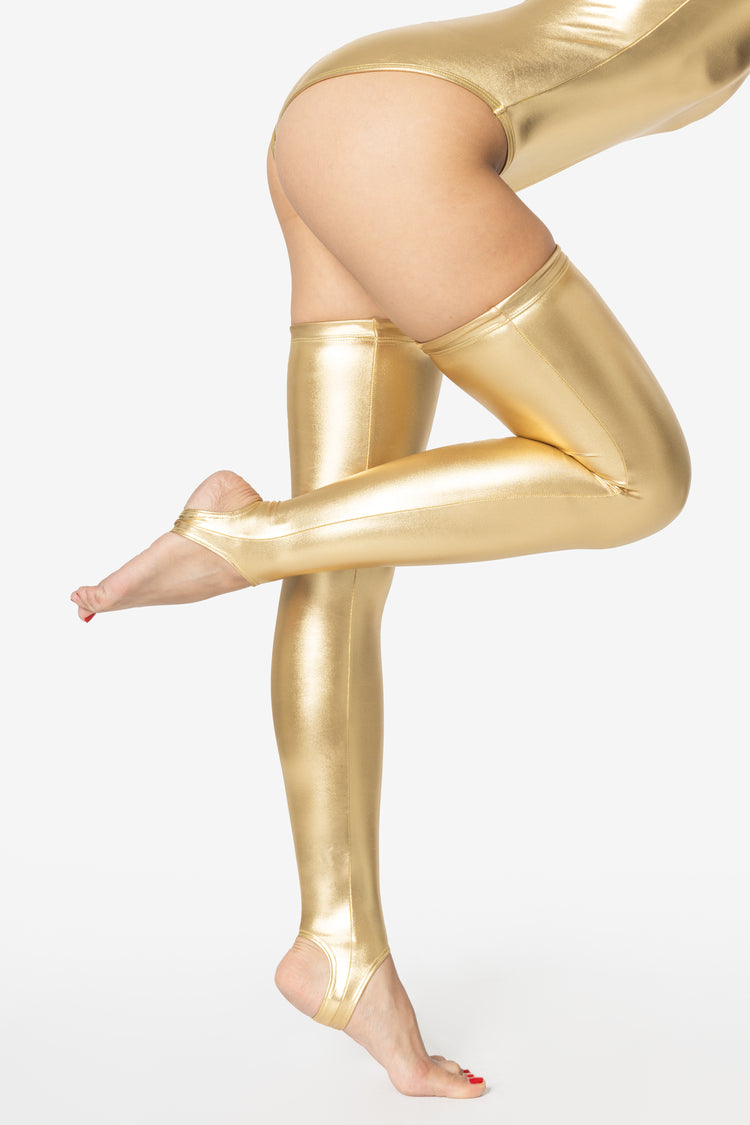
Stretch Lamé adds metallic shine to the same high, open-foot stirrup direction.
View Lamé →
The glossy vinyl surface makes the legwear more directional while preserving the open-heel stirrup shape.
View vinyl →Which Thigh-High Style Should You Choose?
There is no one best thigh-high for every outfit. Use the finish line you want on the leg, then decide whether you want a full foot or stirrup, what kind of hold you prefer, and how visible the material should be.
Frequently Asked Questions
What is the difference between thigh-high and over-the-knee socks?
They belong to the same tall-sock family, but the intended height is different. A thigh-high is the longer upper-leg direction, while an OTK is designed to finish lower above the knee. As a current Los Angeles Apparel example, the core Thigh High Sock lists about 26 inches of leg length and the Classic OTK lists about 20.5 inches.
How high should thigh-high socks sit?
There is no single body point that works for every wearer. The result depends on the sock’s length, your leg length, stretch and where you position the top edge. Start with a product designed for the height you want, then adjust it within that construction instead of forcing a shorter sock much higher.
How do you keep thigh-high socks from falling down?
Begin with the construction: correct sock length, the product’s cuff or silicone system, proper heel or stirrup placement and smooth fabric distribution along the leg. Our current styles use different solutions, including a foldover hem, a ribbed cuff with elastic and silicone elastic on stirrup styles.
Are thigh-high socks supposed to be tight?
They should feel secure enough for the exact construction to work, but there is no single tightness standard for every thigh-high. A foldover knit cuff, a cotton rib cuff and a silicone-backed stirrup edge will not feel identical. Use the product’s size guidance and avoid treating maximum tension as the goal.
Can you wear thigh-high socks scrunched down?
Some styles support it. Our core Thigh High Sock specifically says the rib can be worn pulled up or scrunched down. Do not assume every specialty stirrup or OTK is intended to be styled the same way.
What shoes work with thigh-high socks?
Match the shoe to the direction of the outfit. Loafers, Oxfords and Mary Janes work naturally with a classic OTK/preppy proportion. Sneakers can make a full-foot thigh-high feel more casual, while boots or heels can work with sleeker stirrup and statement finishes. Keep the shoe simple when the sock material is already doing a lot visually.
Can you wear thigh-high socks with shorts?
Yes. Shorts show more of the sock, so the height becomes a larger part of the outfit. Keep the upper half relatively simple when you want the legwear to be the focal element, and choose the top edge intentionally rather than pulling every sock to its maximum stretch.
Do thigh-high socks come in different lengths?
Yes. Even within our current assortment, the core Thigh High Sock lists an approximate 26-inch leg length while the Classic Over The Knee Sock lists about 20.5 inches. That difference is why the product name and intended height matter before color.
What is a thigh-high stirrup sock?
It is a tall sock with an open heel and much of the foot left uncovered, plus a strap that passes under the arch. Our Nylon Tricot stirrup combines that foot shape with silicone elastic at the upper edge.
Should you size up if you have long legs?
Only where the exact product says so. Our Nylon Tricot, Velvet and Lamé thigh-high stirrups currently recommend sizing up if you are unsure or have longer legs. The Stretch Vinyl Stirrup has a different note: it runs small and recommends sizing up one size when you are unsure. Do not apply either rule to every thigh-high.
Choose Height Before Color
Color is the easiest choice to make after the structure is settled. Start with the line you want on the leg, then work down through the construction and fit until the product makes sense for the outfit you actually plan to wear.
-
01
Height
Decide between full thigh-high and a lower OTK proportion.
-
02
Construction
Choose full foot or stirrup, then compare foldover, rib/elastic and silicone-based hold.
-
03
Fit
Check the foot or stirrup, heel alignment, leg tension and upper edge as separate zones.
-
04
Material
Choose cotton-rich, technical knit, nylon tricot, velvet, Lamé or vinyl based on how visible you want the surface to be.
-
05
Styling role
Decide whether the sock should read everyday, preppy, athletic or statement-led.
-
06
Color
Now choose the color that supports the silhouette instead of asking color to solve the fit decision.
That order keeps the guide useful after trends change. A good pair is not simply the color you liked first; it is the height, hold and construction that work with your leg and the look you are building.