What Is Velour? Fabric, Fit, Care & How to Style It
Everything you need to know about velour: understanding the fabric structure, finding your ideal silhouette, and styling pieces that last.
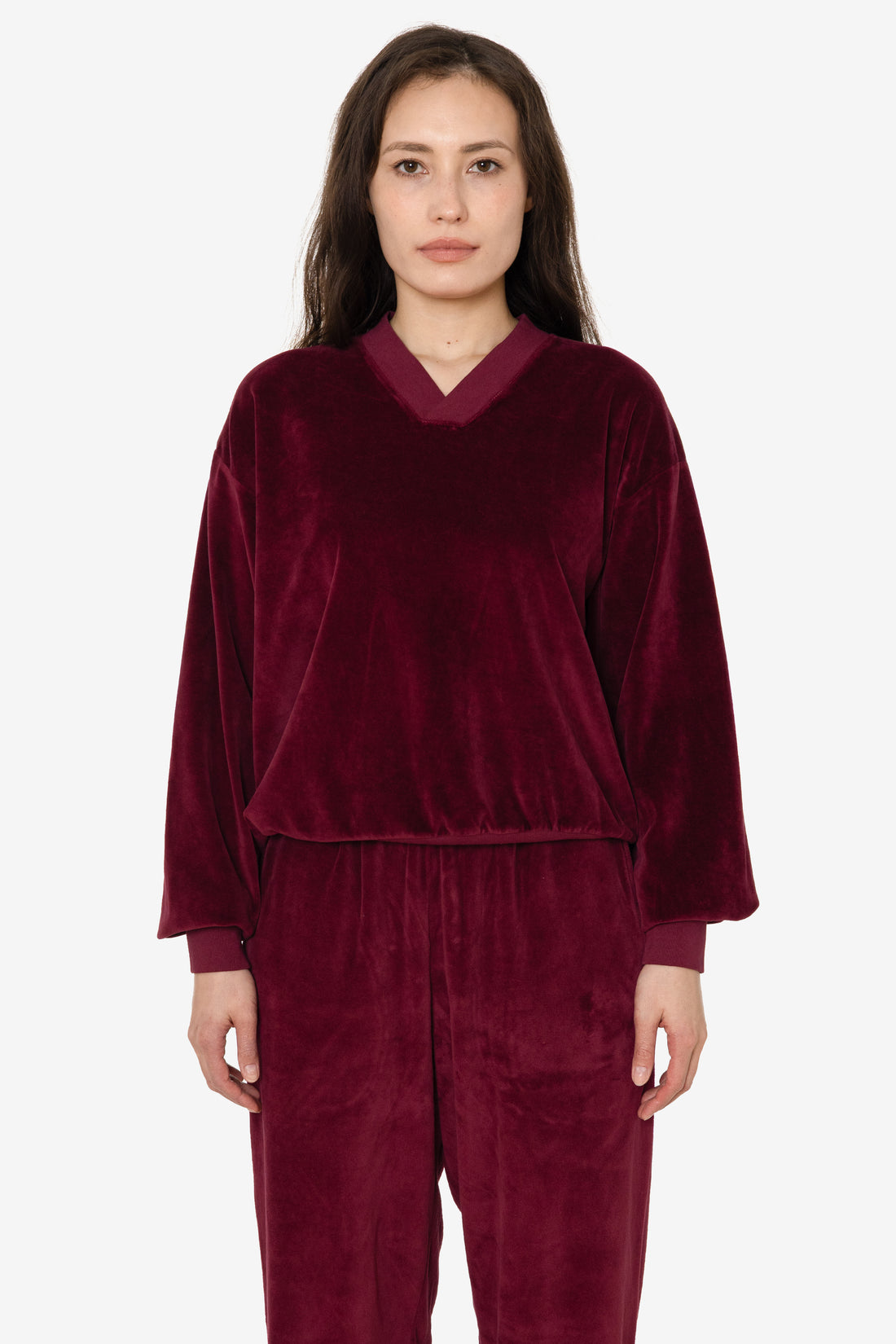
Velour is a soft pile fabric with a plush surface and a knit foundation, which is why it can look rich like velvet while feeling easier, stretchier, and more relaxed on the body. In clothing, that combination makes velour especially useful for hoodies, lounge pants, fitted bottoms, skirts, tanks, and other pieces where texture has to move with the wearer.
The important part is not simply that velour feels soft. Its raised pile changes how color catches the light, its knit structure changes how a garment stretches and drapes, and the cut determines whether that texture reads sporty, fitted, relaxed, or dressed up.
At Los Angeles Apparel, we work with velour as an apparel fabric rather than a novelty finish. Our current velour collection uses an 80% cotton / 20% polyester textile that we garment dye for rich color and a lived-in, nostalgic character.
This guide explains what velour is, how it differs from velvet, what its texture means for fit, how to care for a velour garment, and how to style it without letting the fabric overpower the rest of the outfit.
Surface
Soft raised pile
Structure
Usually knit
Best Known For
Softness + movement
Our Velour
80% cotton / 20% polyester
What Is Velour?
Velour is a pile textile: instead of presenting a completely flat surface, it has short raised fibers that create a soft, dimensional face. Run your hand across it and the surface can shift slightly in tone because the pile changes direction and reflects light differently.
Most apparel velour is built on a knit structure. That matters because knit construction generally gives the fabric more natural movement than a traditional woven pile fabric. The result is a material that can feel plush without automatically feeling stiff or formal.
Velour is not defined by one single fiber recipe. It can be made with cotton, polyester, spandex, or blends. Fiber content affects hand feel, recovery, wash behavior, sheen, and weight, so “velour” tells you about the fabric family and surface more than it tells you the exact composition.
Velour vs. Velvet: What Is the Difference?
Velour and velvet can look similar because both rely on pile to create a soft surface and shifting sheen. The practical difference is usually underneath that surface: apparel velour is typically knitted, while traditional velvet is woven.
That structural difference changes how the fabrics behave. Velour usually has more give and feels more natural in lounge, active-inspired, and close-fitting clothing. Traditional velvet tends to feel more stable and structured. There are exceptions, including stretch velvets, so construction and fiber content still matter more than the name alone.
| Characteristic | Velour | Traditional Velvet | What It Means in Clothing |
|---|---|---|---|
| Base structure | Usually knit | Traditionally woven | Velour generally moves more easily with the body. |
| Stretch | Often naturally flexible | Usually more stable unless engineered for stretch | Velour works well for fitted pants, tanks, hoodies, and lounge silhouettes. |
| Visual effect | Soft luster with a casual feel | Often deeper, dressier luster | Velour can add shine without making the whole outfit formal. |
| Common apparel use | Loungewear, tracksuits, fitted separates, casual layers | Dresses, tailoring, occasion pieces, statement separates | Choose by the silhouette and movement you want, not by softness alone. |
Why Velour Looks Different in Motion
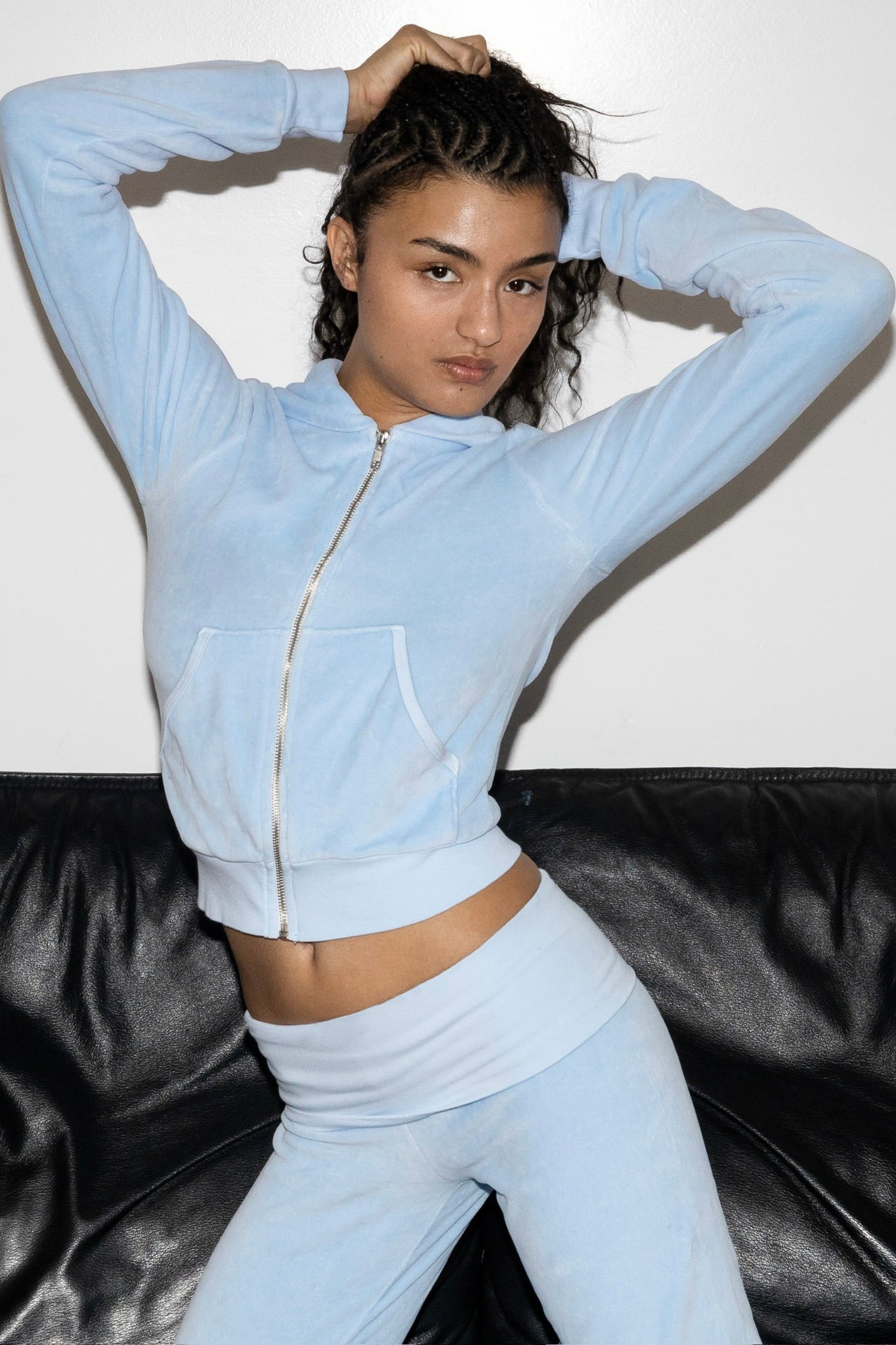
The surface of velour has a direction, often called the nap. When the pile is brushed one way, it can look darker or more saturated; brushed the other way, it can catch more light. That is why the same garment can look slightly different as you move, sit, or turn.
This effect also makes construction important. Panels should be cut and assembled with the pile direction in mind so the garment reads consistently rather than looking patchy. Seams, waistbands, pockets, cuffs, and zippers can interrupt the nap, so a good velour garment needs clean construction as much as it needs a soft face.
Color adds another layer. Our current velour styles are garment dyed after sewing . That process can create rich color and subtle variation from dye bath to dye bath. If you are building a matching set over time, do not assume two separately purchased garment-dyed pieces will be perfectly identical in shade.
Velour changes as the pile moves through light. Use motion to judge drape and sheen, not only a still product image.
How Should Velour Fit?
There is no single correct velour fit. The better question is what you want the pile and drape to do. A close fit makes the fabric follow the body and can emphasize sheen. A relaxed fit gives the pile more uninterrupted surface area, which reads softer and more fluid.
Fitted Velour
For fitted velour, recovery matters. The fabric should stretch without leaving knees, seat, elbows, or waist areas looking permanently bagged out after short wear. A fitted piece also makes seam placement more visible, so twisted side seams or puckered stitching are easier to notice.
Our Velour Garment Dye Yoga Legging is designed as a fitted flared legging with a foldover waistband; sizing up creates a more relaxed lounge fit. The Velour Low Rise Shorts use the same idea: true size for a closer fit, one size up for more room.
Relaxed Velour
Relaxed velour is less about stretch and more about drape. Look at how the fabric falls from the hip, shoulder, or waist. Too much bulk can make plush fabric feel heavy; too little ease can make a lounge silhouette look unintentionally tight.
The Garment Dye Velour Lounge Pant has a roomy straight leg and can sit high or low on the waist. Our Velour Open Bottom Sweatpants move further into a roomy, wide-leg unisex silhouette.
Velour Layers
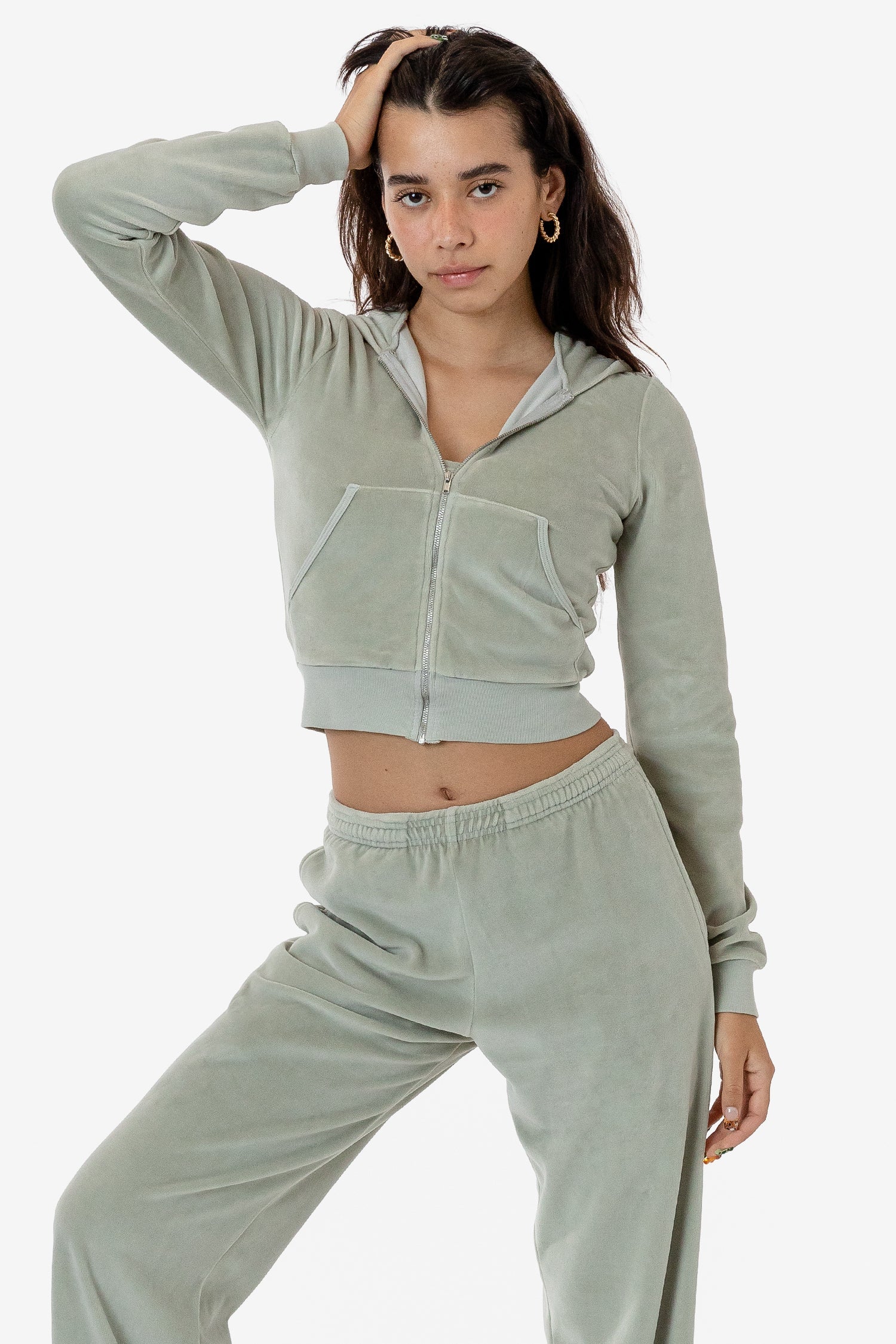
Velour hoodies and sweatshirts need enough room to move without hiding the shape completely. Our Velour Mid-Length Zip-Up Hoodie is intentionally slim through the body and designed to define the waist, while sizing up gives it a roomier feel. For a softer, less body-conscious layer, the Velour V-neck Sweatshirt takes a more relaxed approach.
| Velour Piece | Fit Direction | What the Fabric Does | Easy Styling Route |
|---|---|---|---|
| Mid-Length Zip-Up Hoodie | Slim and waist-defining; size up for more room | Highlights the body line and catches light along the torso and sleeves | Wear with a simple tank and straight or flared bottom |
| Lounge Pant | Roomy, straight leg | Creates a longer, uninterrupted field of texture | Balance with a fitted cotton tee or crop tank |
| Yoga Legging | Fitted with flare; size up for lounge | Emphasizes stretch, movement, and the light-catching pile | Pair with a baby tee, tank, or matching zip-up |
| Velour Skirt | Close through the waist with a simple skirt line | Adds texture without the volume of a full sweatsuit | Keep the top matte and clean |
| V-Neck Sweatshirt | Relaxed layer | Lets the pile read soft rather than body-skimming | Break up the texture with denim or a plain bottom |

How to Style Velour Without Letting It Take Over
Velour already brings texture, shine, and movement. That means the easiest outfits usually give it one clear role: either make velour the statement, or use it as one textured layer against quieter fabrics.
01Wear a Matching Set, but Control the Proportions
A matching velour set works because the surface stays consistent from top to bottom. To keep it intentional, pay attention to silhouette. A slim hoodie with a wider pant creates shape; a fitted legging with an oversized outer layer changes the balance in the opposite direction.
For a full three-piece approach, our Velour Spaghetti Crop Tank can sit under the matching zip-up and lounge pant so the outfit still works when the hoodie is open.
02Pair Velour With Matte Cotton
One of the easiest ways to modernize velour is to put it next to a fabric that does not compete for light. A cotton baby tee, rib tank, plain T-shirt, or simple sock lets the pile do the visual work.
This is especially effective with velour bottoms. A soft, light-catching pant or skirt paired with a matte top keeps the look tactile without making every surface shiny.
03Use One Velour Piece as the Texture
If a full set feels too nostalgic, use only one velour garment. A V-neck sweatshirt with jeans, a velour skirt with a plain tee, or velour shorts with a cotton tank gives the outfit dimension without turning it into a theme.
04Style the Silhouette Before the Era
Velour is closely associated with tracksuits and early-2000s dressing, but the fabric is more useful than one reference. Start with the cut: fitted flare, straight leg, wide leg, mini skirt, cropped tank, slim hoodie, relaxed sweatshirt. Then build the outfit the same way you would with any other silhouette.
That is the difference between wearing a velour garment and wearing a costume built around velour.
How to Care for Velour
Start with the care label on the specific garment. Fiber content, dye method, trims, construction, and finishing can all change the correct cleaning method. In the United States, garment care labels are intended to provide the regular care method that can be used without substantial harm to the product, so the label should take priority over a generic “velour” rule. You can read more about that standard in the FTC's care-label guidance .
If the label allows home washing, gentler handling is usually the safer approach for a pile fabric. Turn the garment inside out when practical, separate it from rough hardware or abrasive items, avoid aggressive scrubbing, and choose the coolest, lowest-agitation method permitted by the label.
Heat deserves special attention. Direct high heat can flatten or mark a raised pile, so do not press a hot iron straight onto the face of velour unless the garment's care instructions specifically permit it. If the pile looks compressed, let the garment hang and recover before deciding it needs more treatment.
For spills, blot rather than grind the stain into the pile. For matching sets, wash pieces with similar colors and care requirements, especially when you want the surface and shade to age at a similar rate.
Our current velour product pages describe the collection as shrink-free, but that does not make care instructions optional. Shrink resistance and surface care are different issues: you still want to protect the pile, color, seams, waistband, and trims.
What to Look for in a Velour Garment
Softness is the first thing people notice, but it should not be the only thing you inspect. A good velour garment has to control a three-dimensional surface through cutting, sewing, stretch, and repeated wear.
01Check the Pile
Look at the garment from more than one angle. The surface should read consistently unless the design intentionally changes pile direction. Random dark and light patches across panels can signal inconsistent nap direction or crushing.
02Check Stretch and Recovery
On fitted velour clothing, gently stretch the fabric and see how it returns. The material should recover without immediately looking loose or distorted. Pay particular attention to knees, seat, elbows, and waist areas because they take repeated movement.
03Check Seams and Hardware
Inspect side seams, hems, pockets, waistbands, cuffs, and zipper areas. The pile can make puckering more obvious because light catches every ridge. On a zip hoodie, the zipper should run cleanly without chewing into the plush face.
04Check Color in Real Light
Because pile changes with light direction, a color that looks flat indoors may look much richer near a window or outside. Turn the garment slightly rather than judging it from one fixed angle.


Frequently Asked Questions
Is velour the same as velvet?
No. They can have a similar plush, light-catching surface, but velour used for apparel is typically knitted, while traditional velvet is woven. That usually makes velour more flexible and casual in use. Stretch velvet exists, so always check the actual construction and fiber content rather than relying on the name alone.
Is velour stretchy?
Velour often has more give than traditional woven velvet because of its knit base, but the amount of stretch depends on the construction and fibers. A cotton-polyester velour can behave differently from a velour that contains spandex, so fit should be judged on the specific garment.
Is velour warm?
Velour can feel warmer than a flat, lightweight knit because the pile creates extra surface texture and traps some air, but warmth still depends on fabric density, garment shape, and layering. Our current velour textile is designed at a density we use for year-round wear rather than as a winter-only fabric.
Can you wear velour in warm weather?
Yes, depending on the garment and conditions. Shorts, skirts, tanks, and lighter layers expose more skin and can make a plush fabric easier to wear in transitional or warmer weather. A full hoodie-and-pant set will naturally feel warmer than a velour tank or short.
Does velour shrink?
There is no universal answer because velour can be made from different fibers and finished in different ways. Check the product label and care instructions. Our current Los Angeles Apparel velour product pages describe the 80% cotton / 20% polyester collection as shrink-free.
How do you keep velour looking soft?
Reduce unnecessary friction, follow the garment's care label, avoid pressing direct high heat onto the pile, and do not scrub stains aggressively. If the pile looks temporarily flattened after storage or wear, give the garment time to hang and recover before using heat or aggressive brushing.
Wear Velour for the Texture, Not Just the Nostalgia
Velour makes sense when you treat it as a fabric first. Its pile brings depth, its knit structure brings movement, and the silhouette decides whether the final garment feels fitted, relaxed, sporty, minimal, or dressed up.
Start with one shape you already understand. If you like a fitted flare, try velour there. If you live in wide-leg lounge pants, use the fabric to add texture without changing your usual proportions. If you want the full matching-set effect, let the cut do the work and keep the rest of the styling simple.
That approach keeps velour useful beyond a single trend cycle: you are choosing a tactile surface and a wearable fit, not only referencing an era.