How to Choose Thermals: Weight, Fit, Waffle Knit & Layering
Start with the job your thermal needs to do. Weight, fit, neckline, garment type, and wash behavior matter more than choosing a color first.
Thermal at a glance

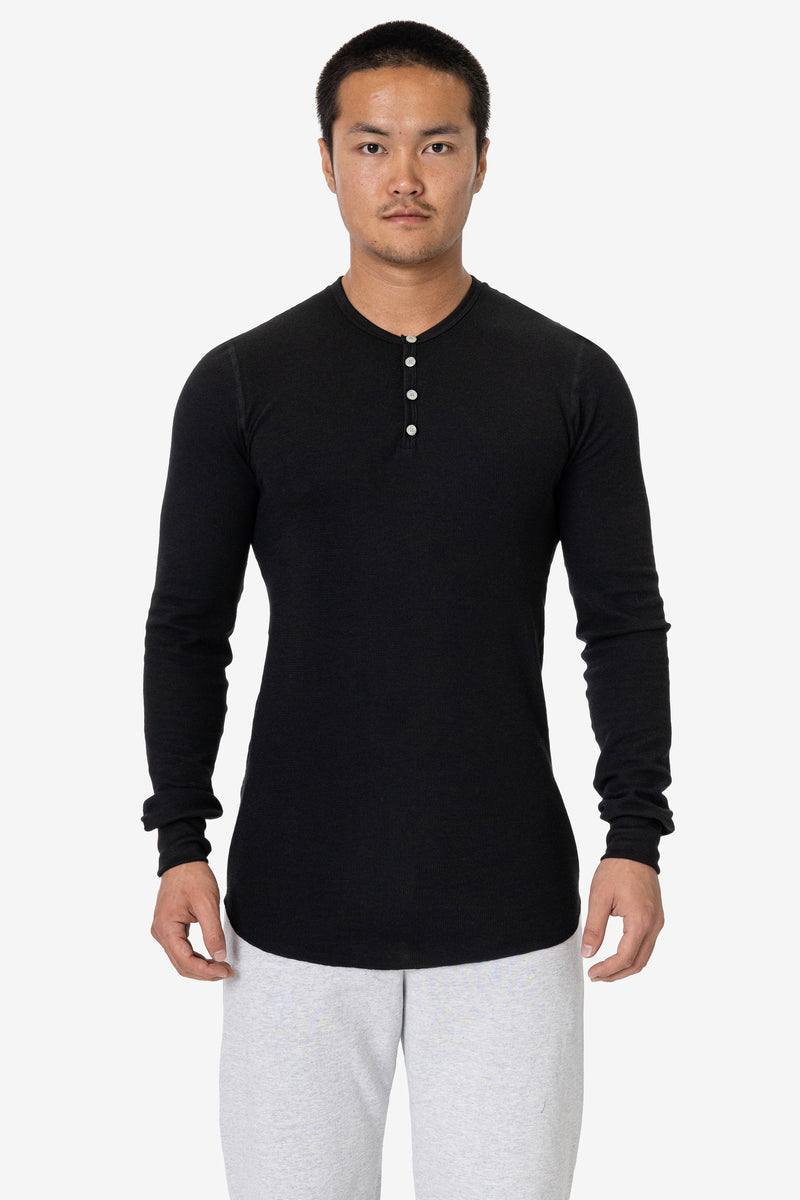
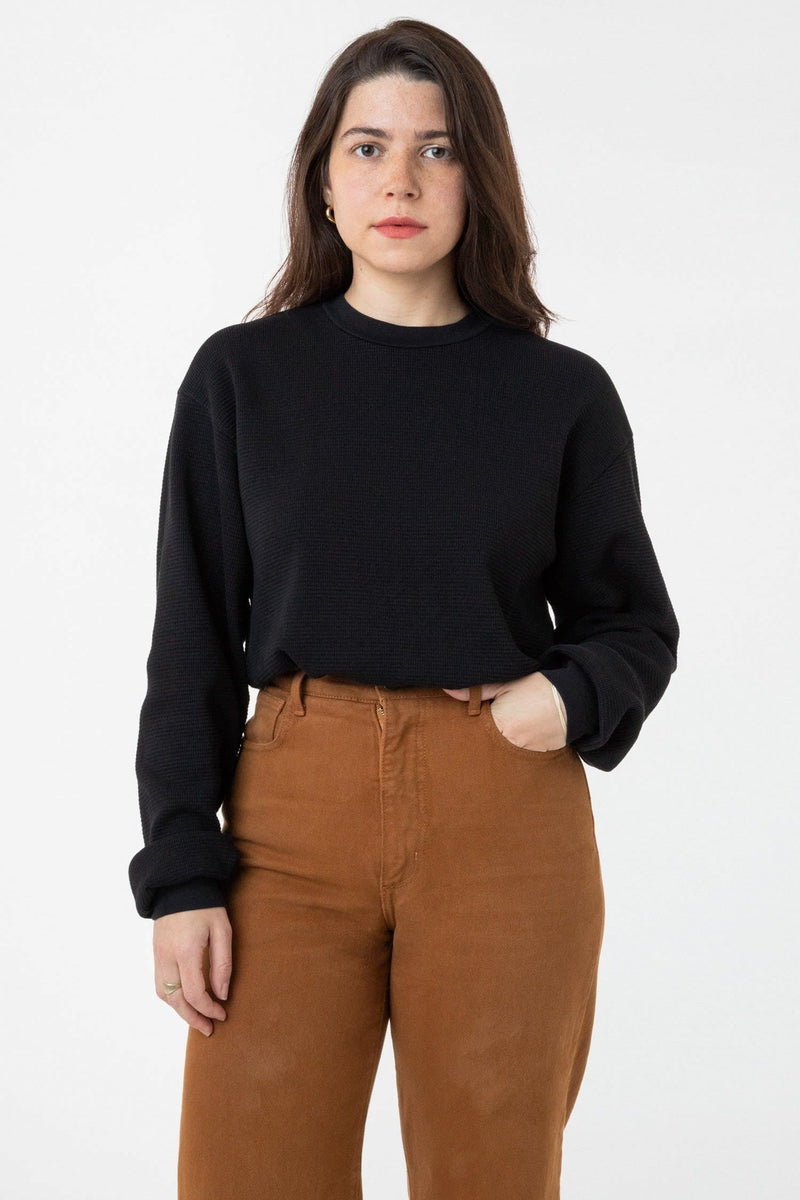
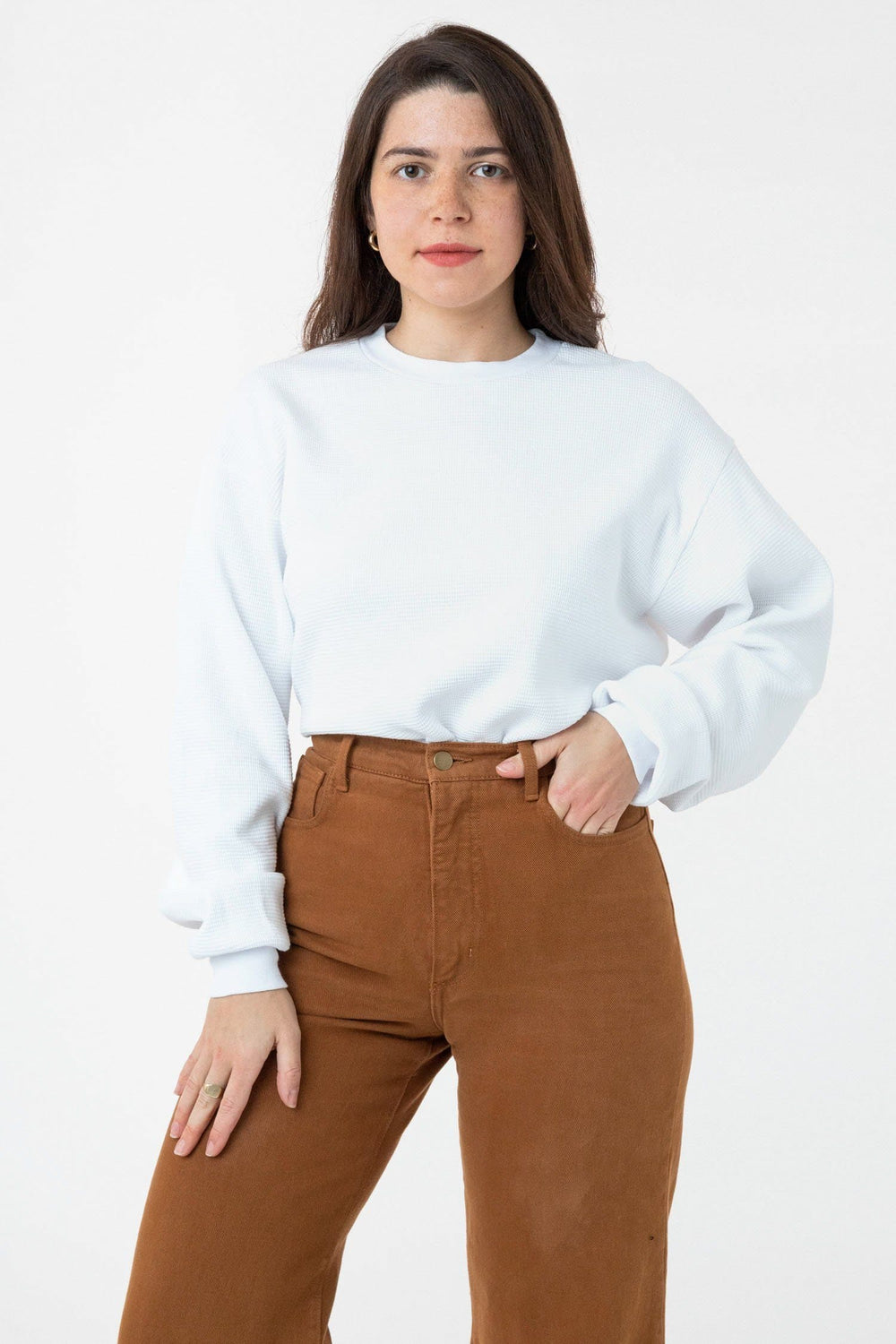
Choose the thermal direction that fits how you plan to wear it. Use the styled look as a reference, then compare a lighter Henley for close, low-bulk layering with a heavyweight crew for a boxier, more substantial standalone fit.
A good thermal starts with the job it needs to do. A lighter waffle-knit thermal can sit close to the body and disappear under a sweatshirt or jacket, while a heavyweight thermal can carry enough visual and physical weight to work more like a substantial long-sleeve top.
That difference is why “thermal” should not be read as one exact fit or one exact fabric weight. Waffle-knit structure, garment weight, neckline, silhouette, and wash behavior all change how a thermal feels and where it works best in an outfit.
At Los Angeles Apparel, our current thermal range includes lighter poly-cotton waffle-knit long sleeves, heavyweight garment-dyed crews and Henleys, fitted thermal leggings, heavyweight sweatpants, and thermal shorts. Those differences are the point: the category makes more sense when you choose by role before color.
In this guide, we compare those roles directly, then walk through how we judge waffle knit, choose a crew or Henley, decide how close the fit should be, layer without unnecessary bulk, and follow product-specific shrink and care information.
Fabric structure
Waffle knit
Lighter role
Easy under another layer
Heavier role
Substantial standalone top
Key decision
Choose use before color
What Makes Thermal Clothing Different From a Regular Long Sleeve?
When we compare a thermal with a regular long sleeve, the easiest difference to see is the surface. A conventional jersey long sleeve usually presents a flatter face, while waffle knit forms a repeating raised-and-recessed grid. That dimensional structure gives a thermal its recognizable texture, changes the way the fabric bends and stretches, and creates small pockets of air at the fabric surface. It still does not make every waffle knit equally warm.
What the word thermal does not tell you is the exact weight. Two shirts can both use waffle-knit construction and still feel very different in the hand. A lighter thermal can behave like a close layering piece; a heavier version can have enough body and texture to read more like a sweater-weight top.
That distinction matters more than assuming every thermal is automatically the warmest choice. Warmth comes from the full system: fabric weight and structure, how close the garment sits, what you wear over it, and the conditions you are dressing for.
Lightweight vs. Heavyweight Thermals
This is the decision to make first. If the thermal needs to sit under fleece or a jacket, lower bulk is useful. If you want the waffle texture to be a visible part of the outfit, a heavyweight thermal gives the garment more presence and a more substantial hand.
Within our current assortment, the lighter poly-cotton crew and Henley are designed to layer under Heavy Fleece. The heavyweight crew and Heritage Henley move in another direction, with a thicker, almost sweater-like hand that gives them enough presence to work as visible tops.
Swipe the table to compare →
| Decision | Lighter thermal | Heavyweight thermal |
|---|---|---|
| Best role | Close layer under fleece, a hoodie, or outerwear. | Visible top or substantial mid-layer when you want the thermal itself to carry the outfit. |
| Bulk | Lower bulk makes another layer easier to add. | More fabric body and visual weight; the garment reads less like underwear. |
| Fit direction | Can be worn closer when the goal is clean layering. | Can be fitted, regular, or boxier depending on the specific style and the look you want. |
| Current LAA examples | Poly-Cotton Crewneck · Poly-Cotton Henley | Heavy Thermal Crew Neck · Heavy Thermal Heritage Henley |
| Wash / shrink behavior | The lighter poly-cotton product pages note approximately 5% shrinkage in the wash. | The heavyweight product pages describe the garments as laundered or pre-washed for a no-shrink true fit. |
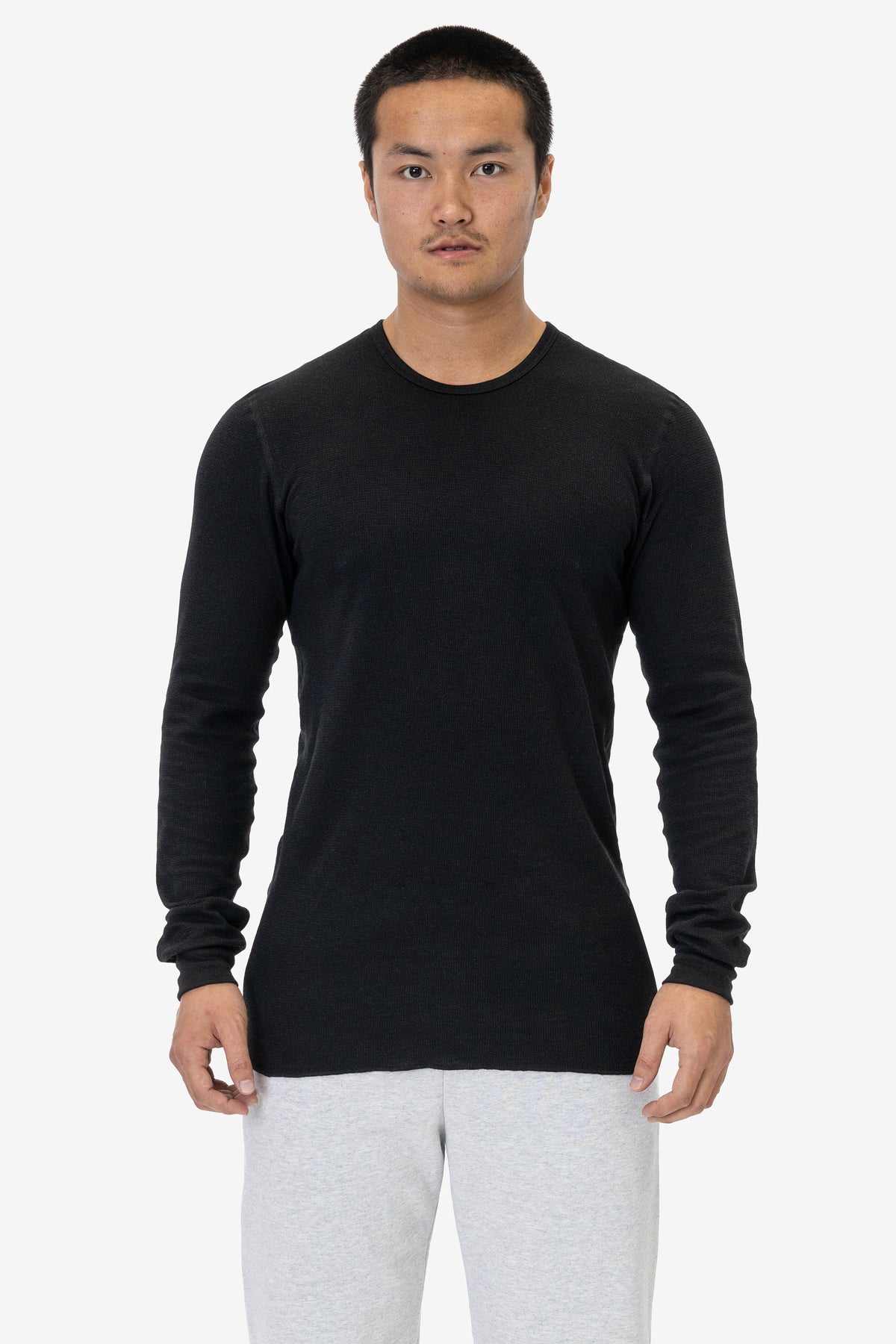
50/50 poly-cotton waffle knit with ribbed wrist cuffs and flatlock seams; designed at a weight that works under heavier layers.
View the lighter crew →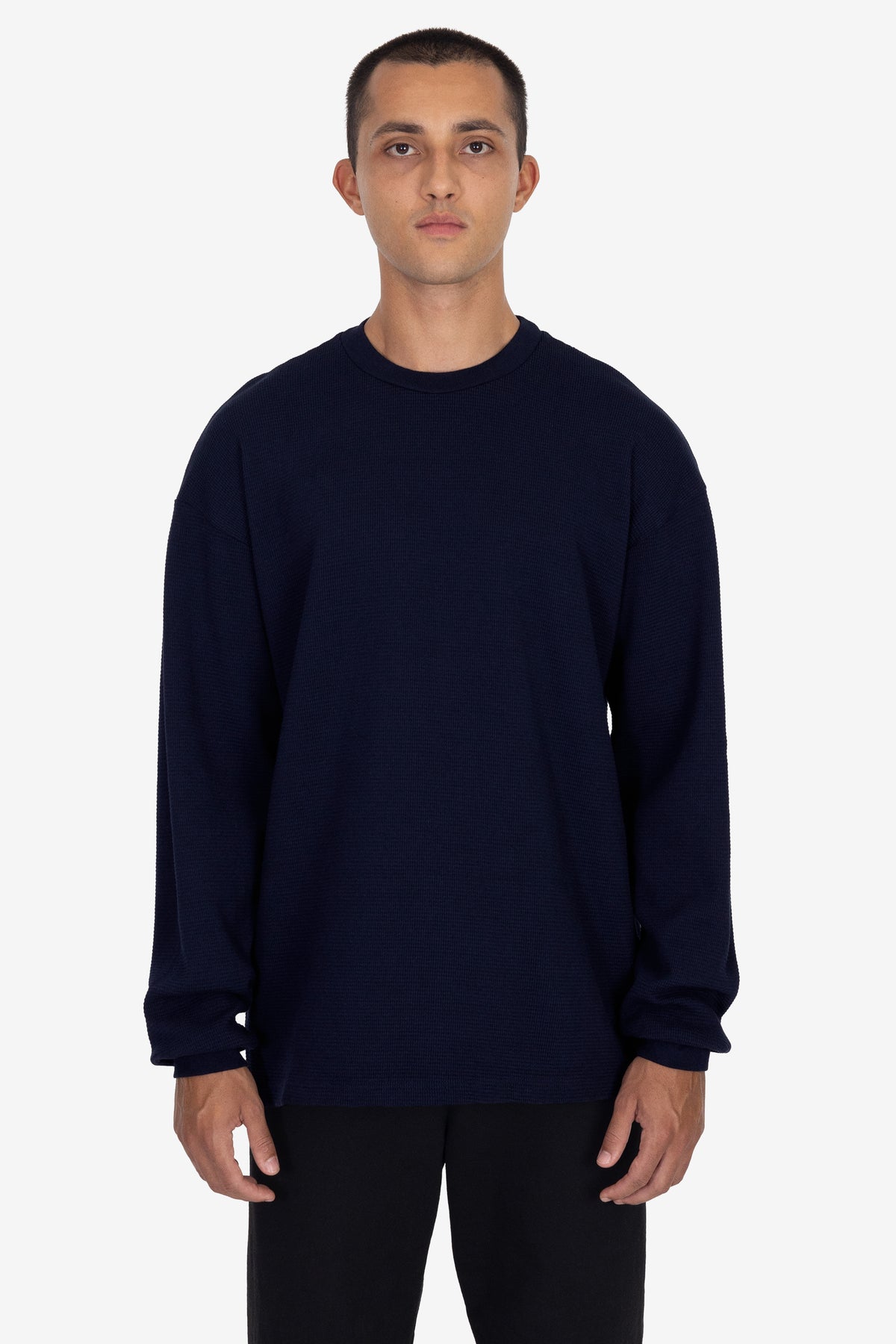
A thicker, garment-dyed thermal with noticeably more body; wear your regular size for the boxier direction or size down for a closer fit.
View the heavy crew →How Waffle Knit Changes the Feel
Waffle knit gets its name from the small geometric recesses formed across the surface. Those high and low points create visible dimension, so the fabric catches light and bends differently from a smooth jersey. On a heavier thermal, the pattern becomes a stronger part of the garment’s look; on a lighter thermal, it reads more as texture under another layer.
When you handle a thermal in person, do not judge the fabric by softness alone. The more useful inspection is how the whole garment responds after you stretch a cuff, bend an elbow, pull the body away from itself, and look closely at the seams and neckline.
Look at how pronounced the raised and recessed structure is. Heavier cloth should look and feel more substantial, not merely darker.
Check whether the fabric and rib return cleanly instead of staying distorted after a small pull.
The cuff should feel secure without turning into the tightest or bulkiest part of the sleeve.
On a close layer, raised or twisted seams are easier to notice because another garment may sit directly over them.
A crew should sit cleanly; a Henley placket should lie flat enough that the extra detail feels intentional.
Weight is easier to understand when you feel the complete shirt, not just a small swatch between two fingers.
Crew Neck vs. Henley Thermals
Crew and Henley describe the neckline, not the thermal’s weight. That separation is useful because both silhouettes can exist as lighter layering thermals or as heavyweight tops.
Crew Neck
A crew neck is the simpler option. It creates a clean opening that is easy to cover with a hoodie, sweatshirt, or jacket, and it can also read like a straightforward long-sleeve shirt when the thermal is worn on its own.
Henley
A Henley adds a button placket and therefore more visible structure at the neckline. That detail matters most when the thermal is exposed. If you expect to wear the piece by itself frequently, the placket can make the top feel more complete without changing the basic waffle-knit category.
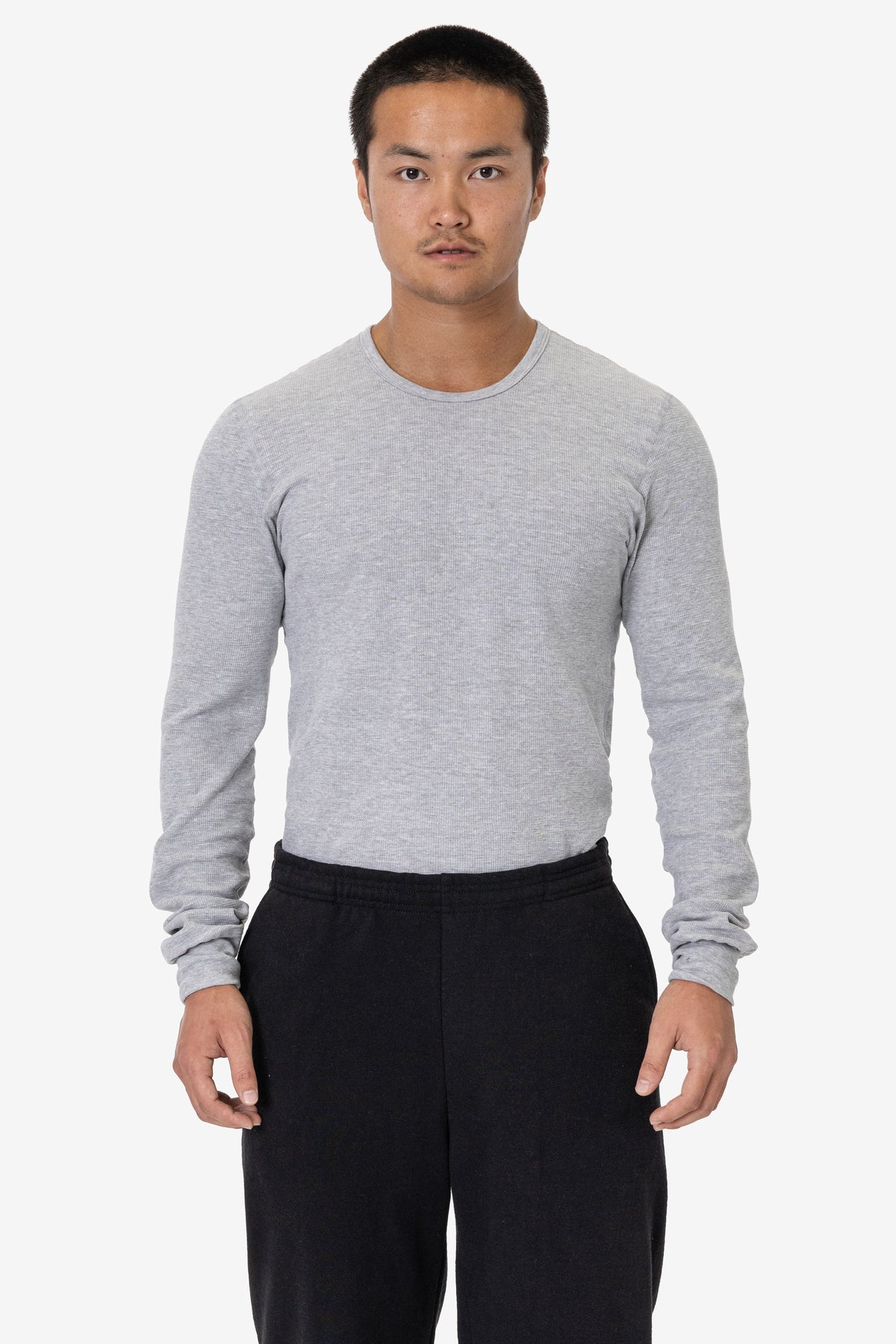
Simple under another layer and visually quiet when you want the waffle texture to do most of the work.
Shop the crew →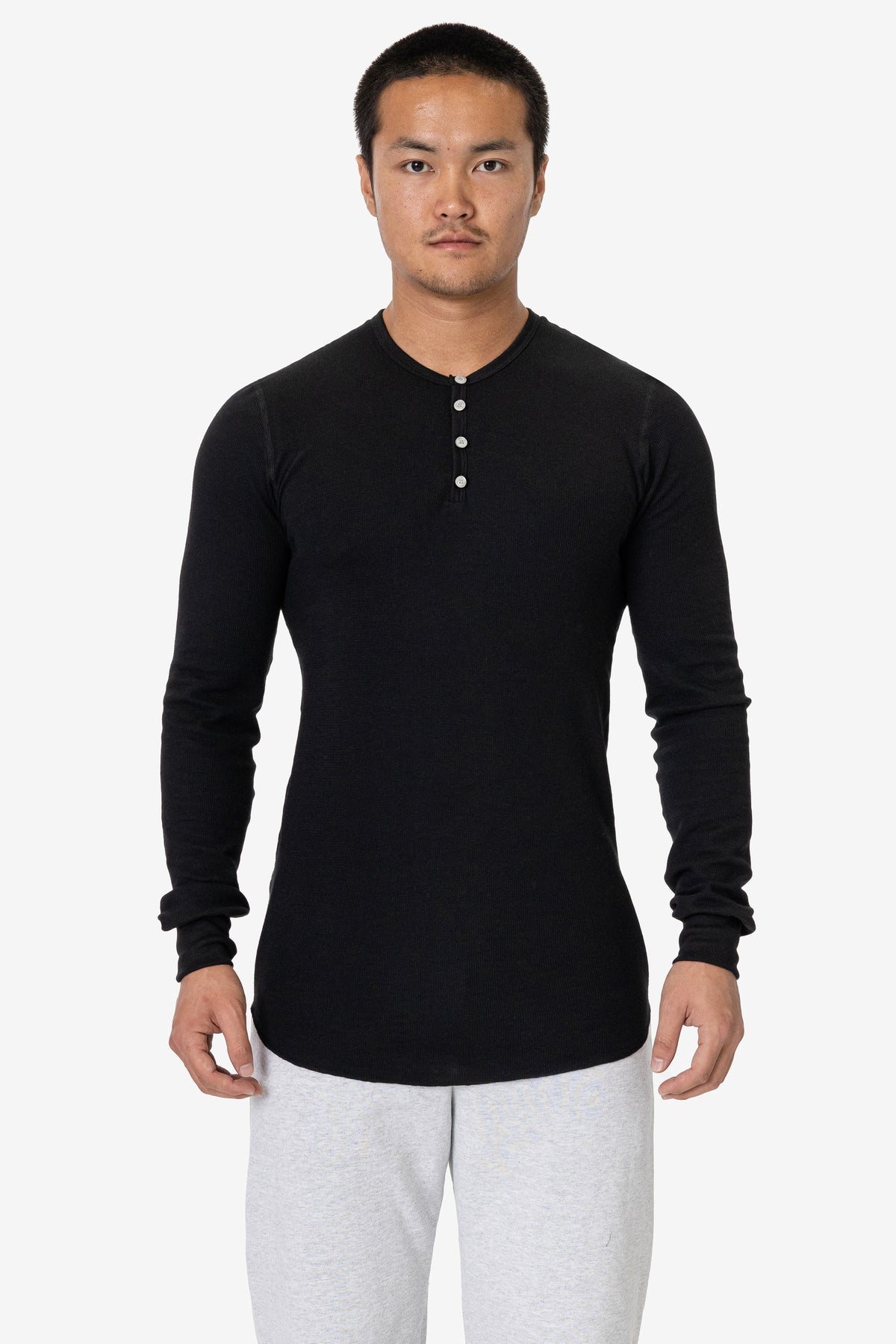
The placket adds visual structure when the thermal is worn as a visible shirt while keeping the lighter waffle-knit role.
Shop the Henley →For the same neckline choice in a heavier fabric, compare our Heavy Thermal Crew Neck with our Heavy Thermal Heritage Henley. The neckline changes; the substantial thermal role remains.
How Should a Thermal Fit?
Thermals do not have to fit skin-tight. Fit should follow function. A close layer reduces bulk under other clothes, while a roomier heavy thermal can shift the garment from underwear-adjacent layering into a visible outfit piece.
Useful when another sweatshirt or jacket is going over it and you want fewer folds between layers.
Enough room to wear alone, but still easy to put under an outer layer when the fabric weight allows it.
More room changes the silhouette and gives heavyweight waffle knit a clearer standalone presence.
Product-specific fit notes matter here. On our lighter crew and Henley, the product pages recommend sizing down one or two sizes depending on the fit you want. The heavyweight crew and Heritage Henley follow a different direction: size down for a closer look, or stay with your regular size for the updated boxier silhouette.
Base Layer vs. Standalone Thermal
Weight and role often point in the same direction, but they are not identical. A lighter thermal usually makes the cleaner base layer; a heavyweight thermal is more likely to work as the visible top. The practical question is what you need the garment to do once the next layer is added—or removed.
We reach for a lighter thermal when the first layer needs to stay close and easy to build on.
We move to a heavier thermal when we want the waffle knit itself to supply more presence, shape, and texture.
Thermal Pants, Sweatpants & Long Johns
Thermal fabric is not limited to long-sleeve tops, and the lower-body category makes the difference between fabric and garment role especially clear. A fitted legging can be a close under-layer; a heavy thermal sweatpant is designed to be seen; thermal shorts keep the texture while removing full-leg coverage.
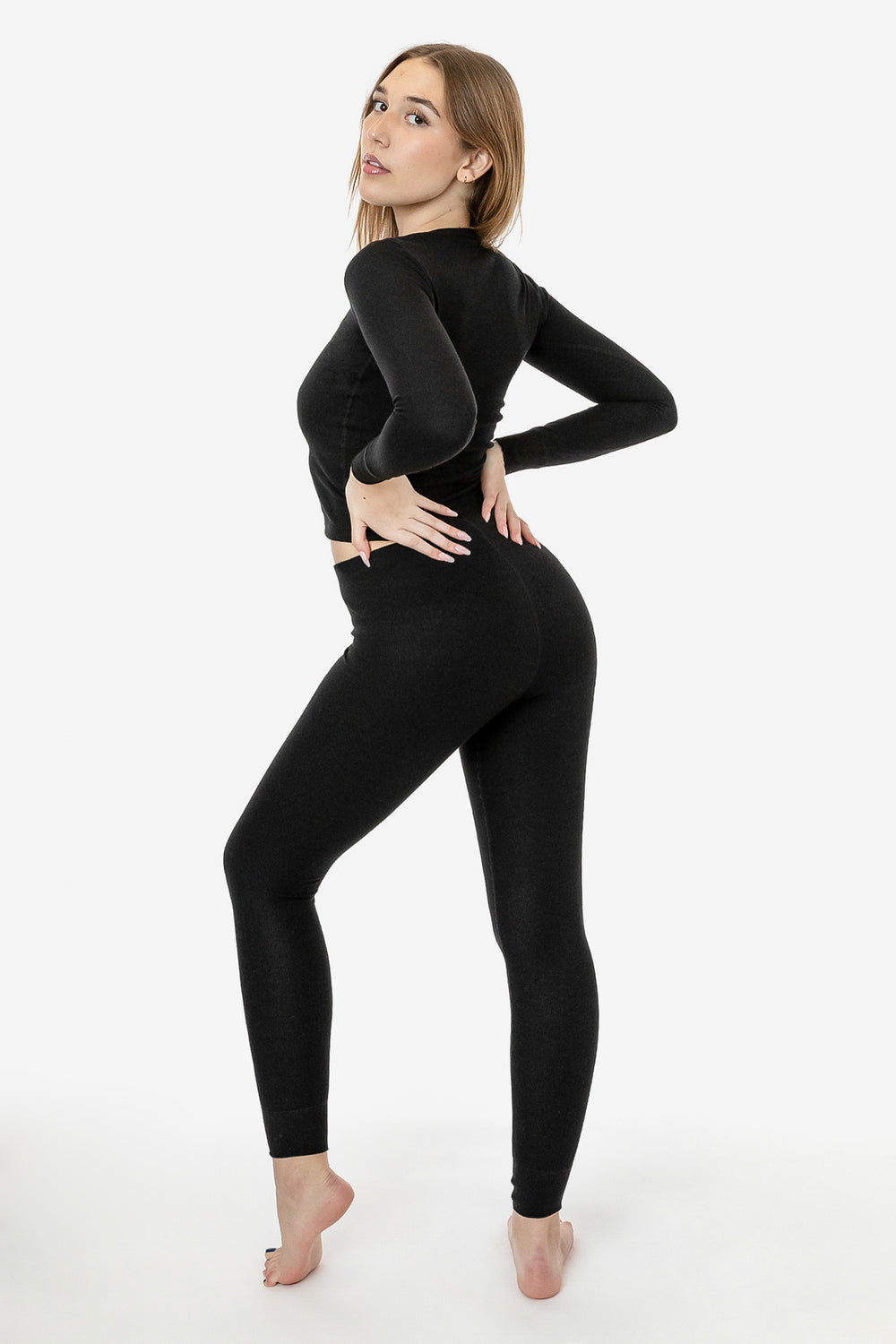
Our 50/50 poly-cotton waffle knit in a close legging silhouette with ribbed ankle cuffs and flatlock seams; the current page notes about 5% wash shrinkage.
View the thermal legging →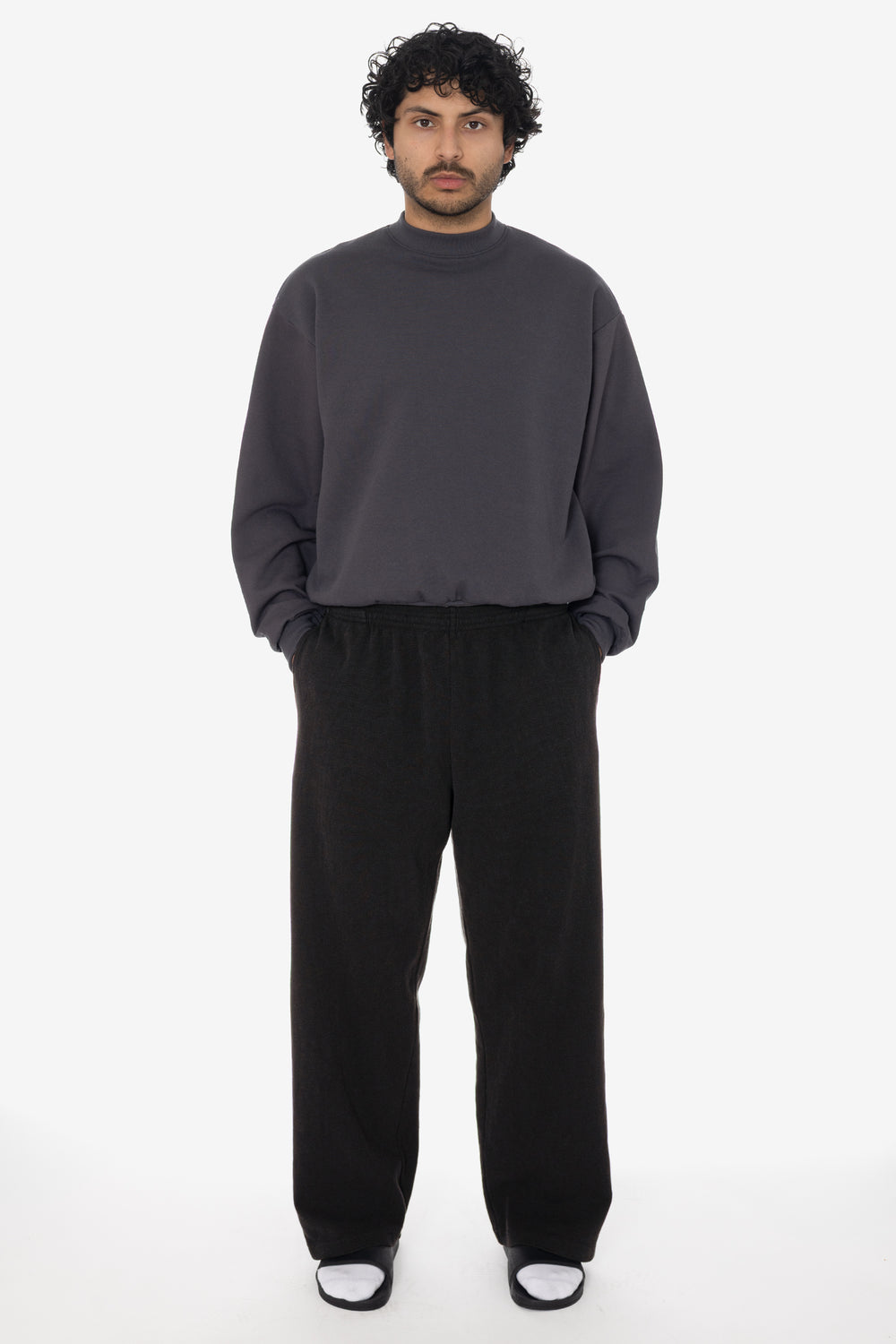
Our heavyweight thermal in a roomier sweatpant silhouette designed to stay visible as loungewear or everyday wear.
View the sweatpants →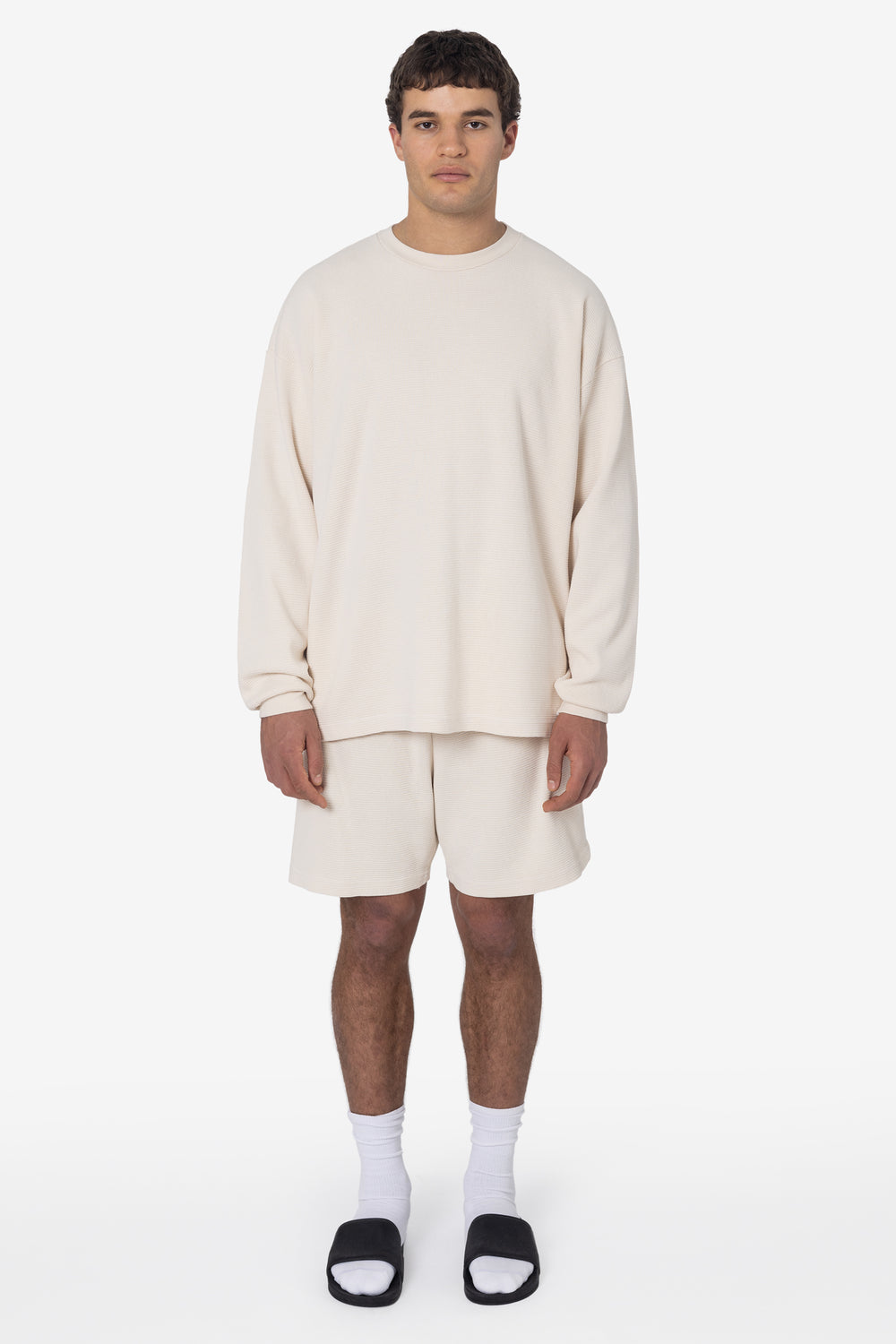
Our substantial thermal fabric in a short silhouette when you want the texture and weight without full-leg coverage.
View the thermal shorts →What about long johns?
Long john describes a long, close lower-body underwear silhouette more reliably than it describes one exact fabric. Our Men’s Baby Rib Long John, for example, is made from 100% combed-cotton 1x1 rib rather than waffle knit. That is a useful reminder not to treat “long john” and “waffle-knit thermal” as identical textile terms.
Choose a fitted lower layer when the goal is to sit beneath another pant. Choose thermal sweatpants or shorts when the texture and silhouette are meant to stay visible.
How to Layer Thermals
When we build a thermal outfit, we treat layering as a sequence, not a pile. We start with the piece that needs to sit closest to the body, add insulation only when it helps, then choose an outer layer that suits the conditions. If the first thermal is already heavyweight and visible, the fleece step can wait until the weather actually calls for it.
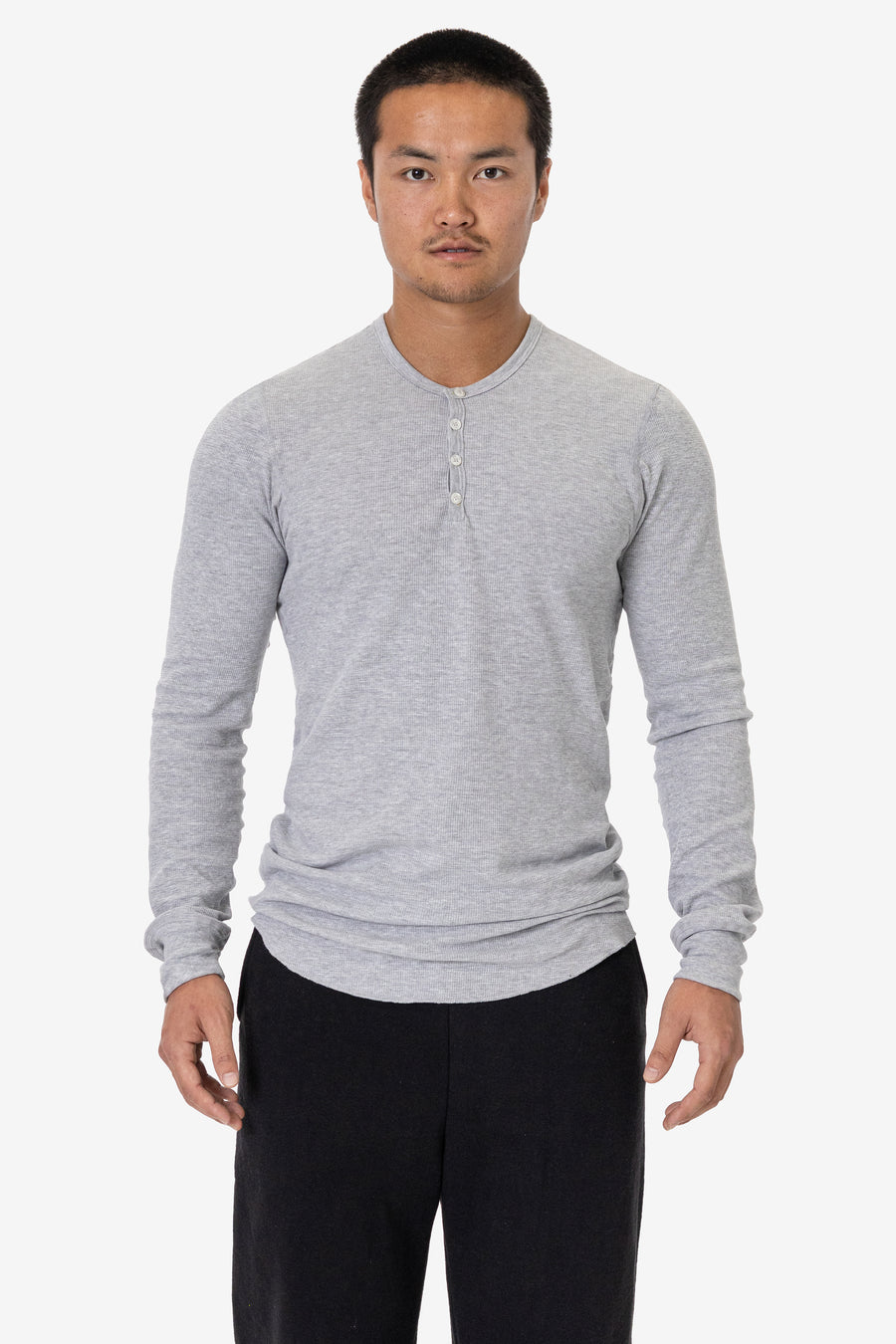
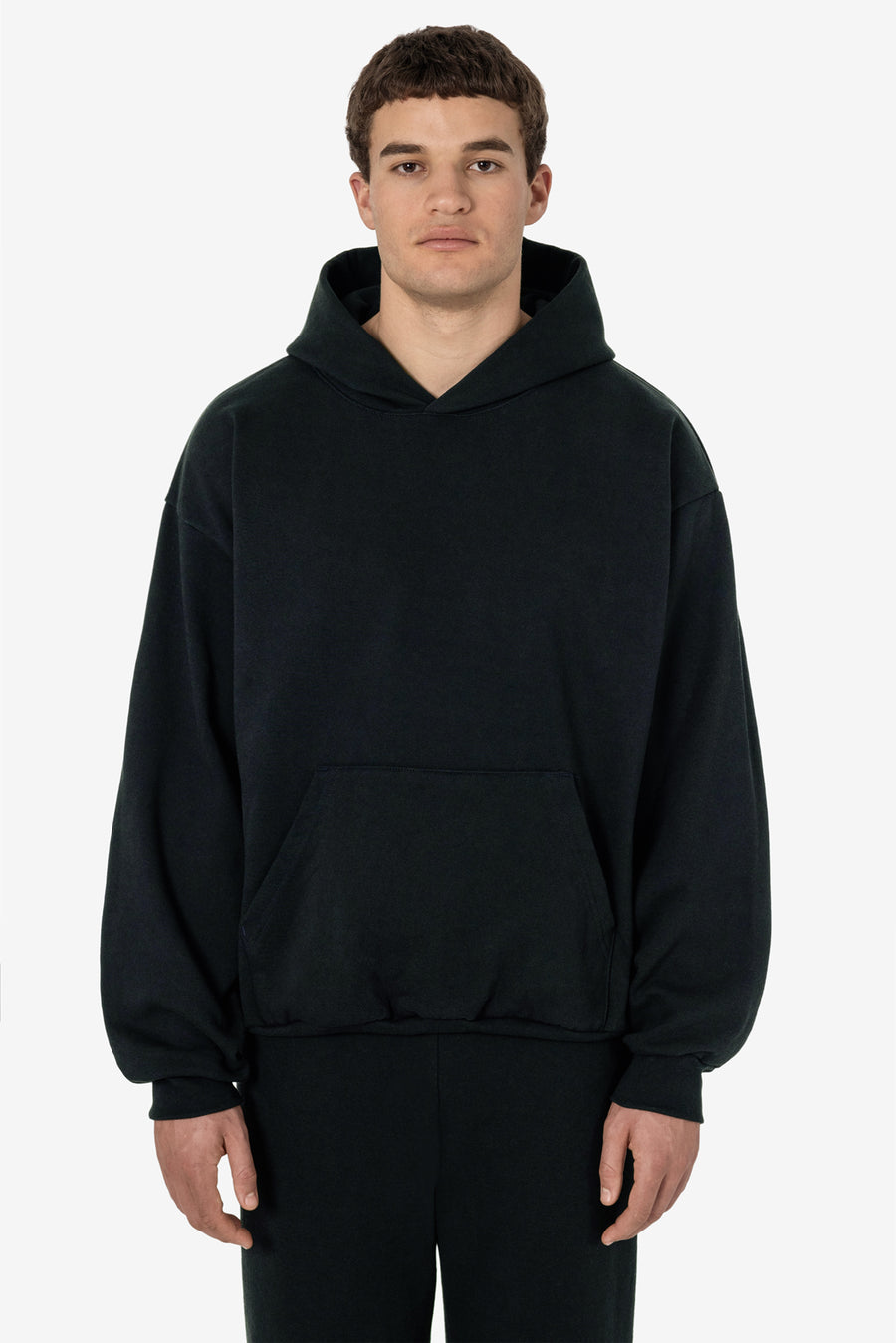
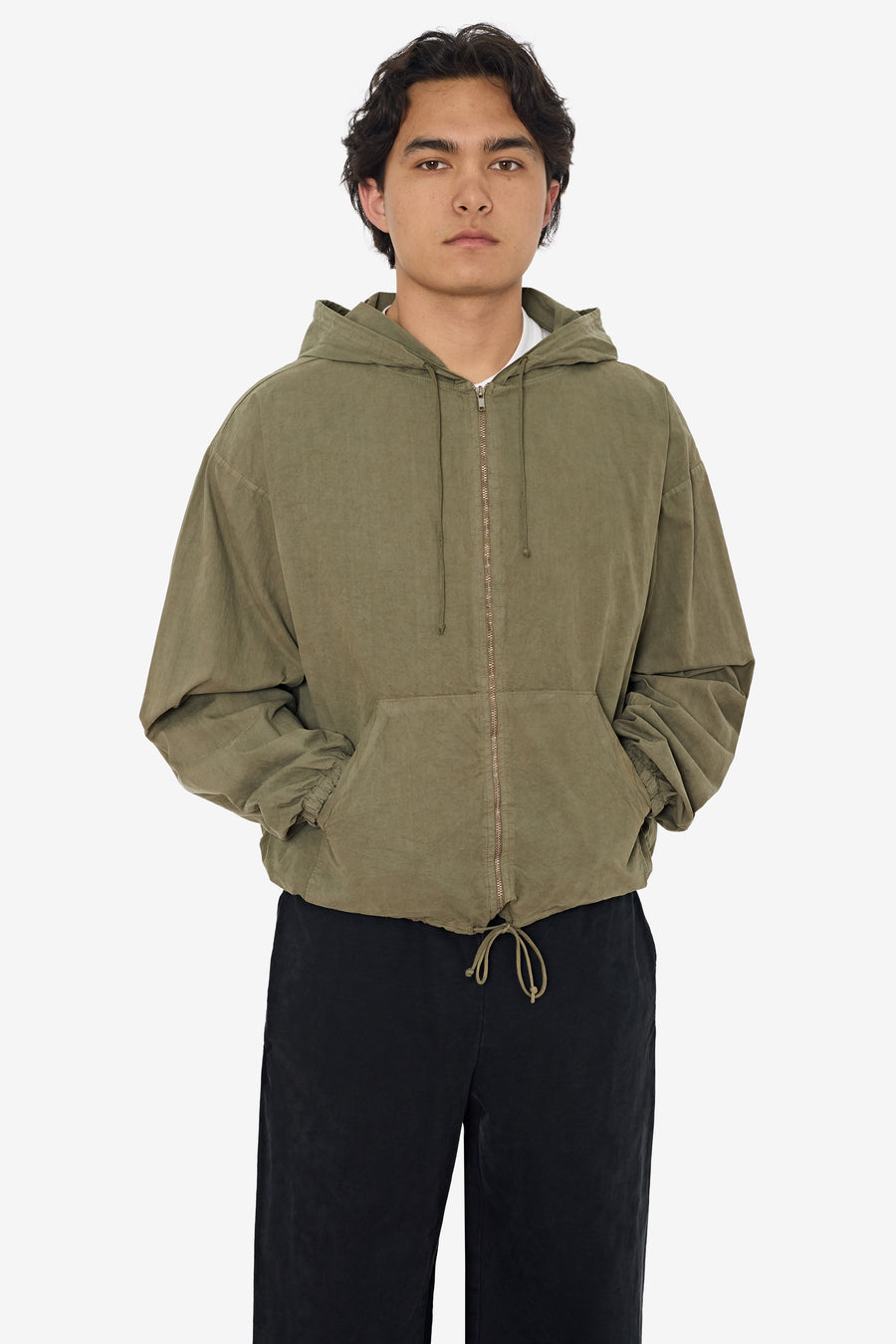
Why this works: the lighter thermal keeps the first layer relatively lean; Heavy Fleece adds insulation and volume above it; the light outer layer finishes this example without asking the thermal to do every job at once. In colder or wetter conditions, choose outerwear with the protection the weather actually requires.
Four practical layering formulas
We use this when the first layer should stay lean and the visible volume should come from fleece and outerwear.
Use this when you want the placket to stay visible and the jacket to finish the outfit rather than cover it completely.
We choose this when the thermal itself should provide the texture, weight, and silhouette of the outfit.
Use a close lower layer beneath another pant when the goal is hidden coverage, not a visible sweatpant shape.
Shrinkage, Washing & Care
There is no honest one-line shrinkage rule for every thermal. The product pages show why: our lighter poly-cotton styles and pre-washed heavyweight garment-dyed styles do not carry the same shrink guidance.
Swipe the table to compare →
| Product family | Current product-page guidance | What to do |
|---|---|---|
| Lighter poly-cotton crew and Henley | 50/50 poly-cotton; approximately 5% shrinkage noted in the wash. | Use the exact size chart and account for the product-specific note rather than assuming the finished dimensions never change. |
| Baby Thermal Legging | 50/50 poly-cotton; approximately 5% shrinkage noted in the wash. | Follow the sewn-in label and allow for the product-specific fit note: the legging runs slightly small, with sizing up recommended when you are between sizes. |
| Heavy Thermal crew and Heritage Henley | Garment dyed and laundered / pre-washed; listed as no-shrink true-fit styles. | Do not transfer the lighter thermal’s 5% note onto these heavier styles. |
| Heavy Thermal sweatpants and shorts | Garment dyed and pre-washed; listed as no-shrink true-fit styles. | Follow the sewn-in care label, especially when a garment uses a special dye or finish. |
Garment dye also affects how a product should be understood. The garment is colored after it has been cut and sewn, and naturally occurring shade variation can be part of the result. Any color or finish with an additional product-page note should be handled according to that note. Read the exact product page and sewn-in label instead of applying one universal thermal-care rule. You can learn more about the process on our Garment Dye page.
Which Thermal Should You Choose?
We recommend using the thermal’s job as the first filter. Once that is clear, weight, neckline, fit, and garment type become much easier to sort.
Frequently Asked Questions
What is thermal clothing?
Thermal clothing is a broad category of garments designed around warmth and layering, often using a textured knit such as waffle knit. The name does not guarantee one fabric weight, fiber blend, or fit. A thermal can be a close long-sleeve base layer, a heavyweight standalone shirt, a fitted lower layer, a sweatpant, or even a short.
Is waffle knit warmer than a regular T-shirt?
It can be, but the knit name alone does not determine warmth. Waffle knit creates a dimensional surface, while actual warmth also depends on fabric weight, density, fit, and the layers worn over it. A lightweight waffle thermal and a heavyweight waffle thermal can feel very different, so compare the complete garment rather than the surface pattern alone.
Are thermals supposed to fit tight?
No. A fitted thermal is useful when it needs to sit under a sweatshirt or jacket with minimal bulk, but a regular or relaxed fit can make more sense when the thermal is worn visibly. Heavyweight styles especially can work as standalone tops. Use the fit guidance for the exact product instead of applying one tight-fit rule to the entire category.
What is the difference between lightweight and heavyweight thermals?
The practical difference is how much body and bulk the fabric brings to the garment. Lighter thermals are easier to place beneath fleece or outerwear. Heavyweight thermals have a more substantial hand and can read more like a sweater-weight long sleeve when worn alone. Fit and wash behavior can differ too, so check the specific style.
Can you wear a thermal shirt by itself?
Yes. The question is whether the particular thermal has the weight and fit you want as a visible top. A lighter close-fitting thermal may look and feel more like a base layer, while a heavyweight crew or Henley can carry more texture and visual weight on its own. There is no rule that a thermal must stay hidden.
What is the difference between thermals and long johns?
“Thermal” describes a broad clothing category and is often associated with textured insulating knits. “Long john” usually describes the long, close lower-body underwear silhouette. The terms overlap, but they are not identical fabric specifications. Our Men’s Baby Rib Long John uses 1x1 cotton rib rather than waffle knit, which makes the distinction clear.
Should you size down in a thermal shirt?
Not automatically. Our lighter crew and Henley recommend sizing down one or two sizes depending on the fit you want. The heavyweight crew and Heritage Henley instead say to size down for a closer look or stay with your regular size for the boxier fit. That guidance does not apply to every thermal, so use the notes on the exact garment.
Do thermal shirts shrink?
Some do and some are pre-washed to minimize or eliminate expected shrinkage. Our lighter poly-cotton crew and Henley pages note approximately 5% shrinkage in the wash, while the heavyweight crew and Heritage Henley are described as laundered or pre-washed for a no-shrink true fit. Always check the exact garment.
What should you wear over a thermal?
Match the next layer to the thermal’s weight. A lighter thermal works naturally under a sweatshirt, Heavy Fleece hoodie, or jacket because it adds less bulk. A heavyweight thermal can be worn as the visible top and only needs another outer layer when the weather or activity calls for it. Build the system from the body outward.
Is a Henley thermal warmer than a crew neck?
Not by definition. Henley and crew describe neckline construction, while warmth depends more on fabric weight, density, fit, and layering. We currently offer both lighter and heavyweight thermal directions in crew and Henley shapes, so the neckline itself is not a reliable warmth ranking. Choose it for layering ease and visual preference.
Choose the Thermal by Weight and Use
We start with the role, not the color: close base layer, visible top, fitted lower layer, or standalone bottom. From there, choose the weight, decide how closely the silhouette should sit, and compare crew and Henley necklines.
Then check the exact garment’s sizing, shrink, dye, and care information. A lighter poly-cotton thermal and a pre-washed heavyweight garment-dyed thermal should not be treated as the same product simply because both have a waffle-knit surface.
Once those decisions are resolved, color becomes easy. You are no longer choosing between thermals that only look different on a product grid; you are choosing the one built for the way you actually plan to wear it.